
Off-Track Repair in Pico Rivera
Off-Track Garage Door Repair, Pico Rivera
Off-track garage door repair for Pico Rivera homes built around 1957. Glendale Garage Door Co explains what fails, why, and when it's a fix, not a full replacement.
- Licensed & Insured
- Same-Area Service Calls
- Upfront Pricing
What Happens When You Call
-
1
Call or Request a Quote
Tell us what the door is doing and roughly how old the house is - that alone points us toward the likely part before a truck leaves.
-
2
On-Site Diagnosis
A tech checks the spring, cables, tracks, and opener in person and tells you plainly what is actually wrong.
-
3
Straight Price, No Surprises
You get a number before any work starts. It covers parts and labor, nothing added after the fact.
-
4
Fixed the Same Visit
Most repairs are done in one trip. If a part needs sourcing, we tell you that upfront instead of guessing.
What the Fix Involves
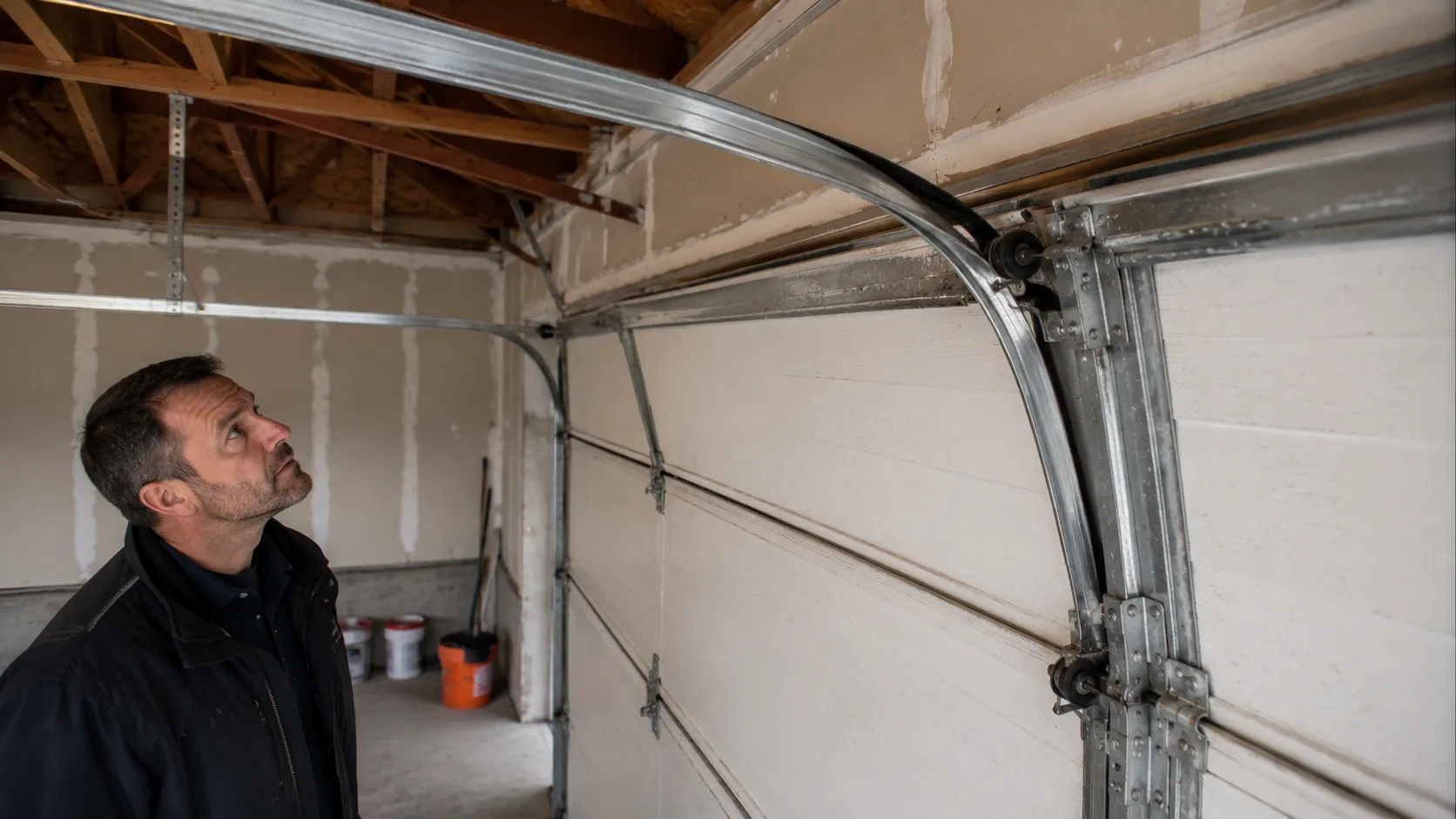
An off-track door means at least one roller has jumped the rail, and the panel is now riding on a bent lip of track instead of inside it. The fix starts with releasing tension safely, working the roller back into the channel, and then checking the track itself for the bend that let it pop out in the first place.
Straightening a mild bend is a five-minute job. A track kinked at a bracket usually means replacing that section, because hammering a bent rail back true just leaves a weak spot that fails again in a few months.
A lot of Pico Rivera's housing dates to right around 1957, which matters here more than people expect. Doors and track hardware from that era were sized for lighter, single-layer panels.
When a homeowner has swapped in a heavier insulated door over the decades but kept the original track and rollers, the old hardware is working harder than it was built for, and a jolt that a modern door would shrug off is enough to walk a roller out of the rail. Part of the job is checking whether the track on the wall still matches the door hanging on it.
Where This Job Goes Sideways
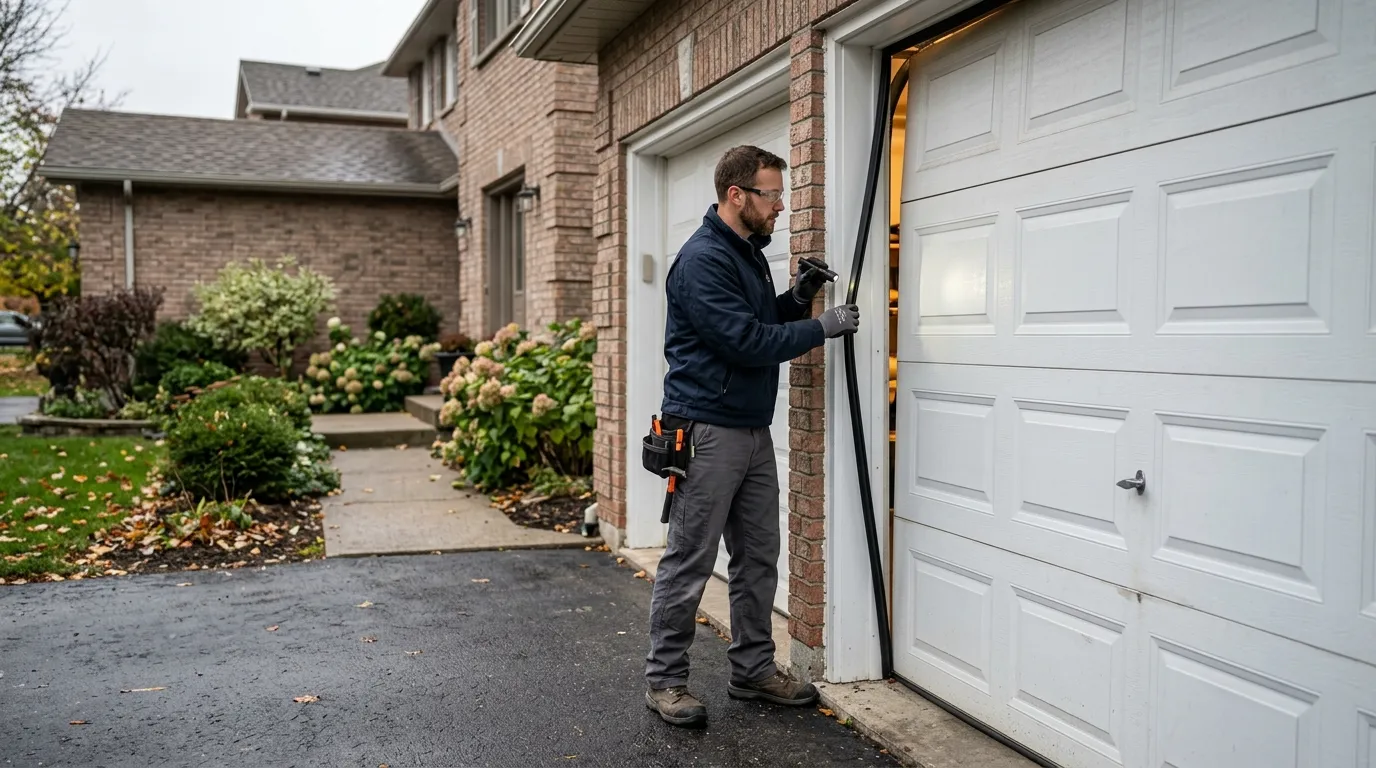
The job goes bad when someone treats an off-track door as a track problem only. If a cable has jumped its drum, or a spring is losing tension unevenly on one side, the door will keep pulling itself crooked no matter how straight the track is set. Re-seating the roller without checking the cable and spring balance is a temporary fix that comes back within weeks.
It also goes wrong on older double doors with a single center-mounted torsion spring, which some houses from the 1950s and 60s still carry. If that spring is original or close to it, it's decades past any reasonable service life, and touching the door while it's under that kind of aged tension is where people get hurt. We won't work a door off track without first checking what's holding the tension, and if that spring looks original, that gets addressed before anything else, even if it means the visit takes longer than the roller fix alone.
Can You Do This Yourself
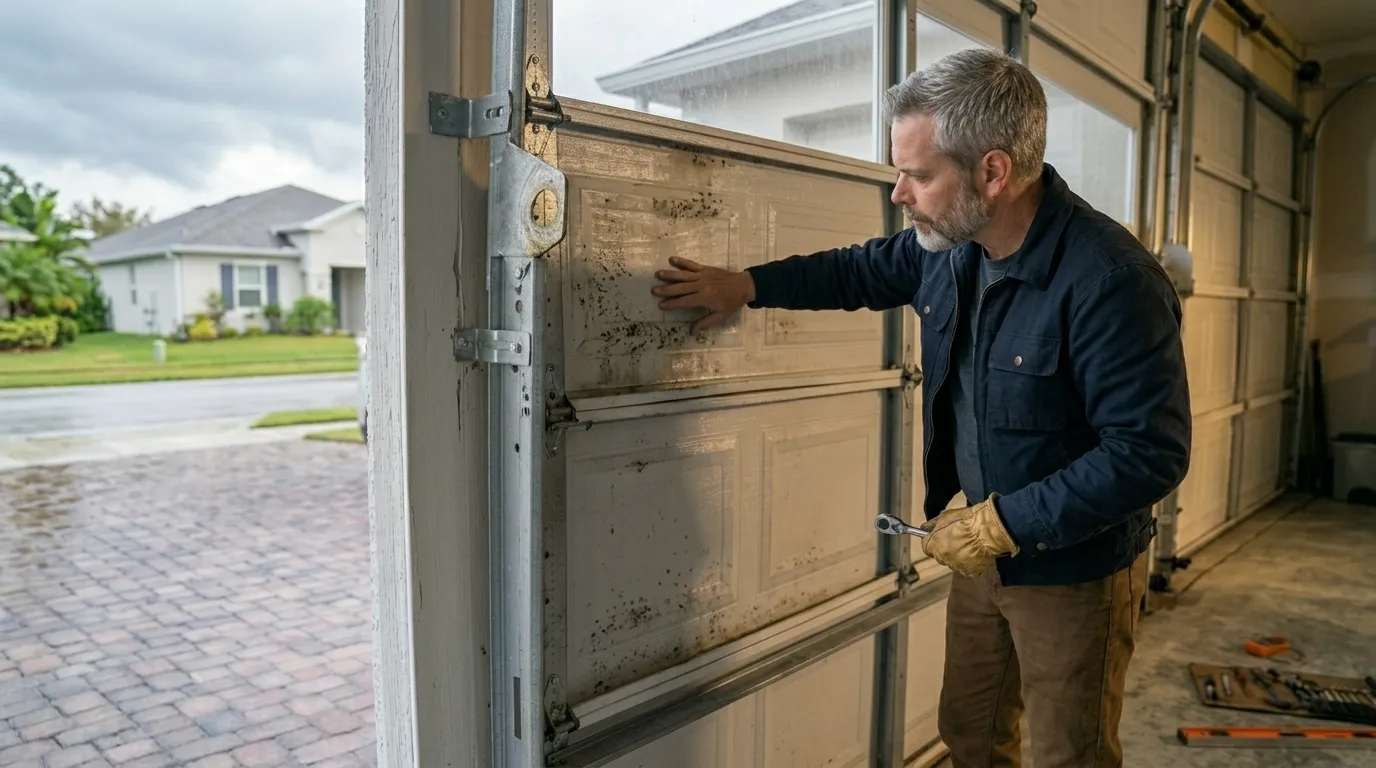
Re-seating a jumped roller on a door that's already down and not under spring load is something a careful homeowner can sometimes do with the door manually supported and the opener disconnected. If the door is still up, or moves at all with tension on it, stop. A torsion spring, even a small one, holds enough stored force to break bones, and there's no way to eyeball whether it's near the end of its life.
What you can safely check yourself: whether the track brackets are loose at the wall, whether a roller looks visibly worn or cracked, and whether the door was fine until something specific hit it, like a car bumper or a gust catching an open panel. That tells whoever comes to fix it what they're walking into.
Beyond that, this isn't a job to save on. A bent track section or a misjudged spring costs far more to fix after a bad DIY attempt than it does the first time.
Why It Happens Here
Pico Rivera sits in a mild temperate climate band, so this isn't a freeze-and-thaw problem the way it might be in a colder market. The bigger factor is age.
With most of the area's roughly 16,800 households in homes built well before 2000, and a good share dating to the late 1950s, a lot of original track hardware has simply outlasted its design life. Steel track doesn't fail all at once; it loosens at the bracket screws, sags a fraction of an inch, and one day a roller catches the edge instead of riding through it.
The other pattern is upgrades that outpaced the hardware around them. A homeowner replaces a light single-layer door with a heavier insulated one, or adds a stronger opener, but leaves the same track and rollers from the 1950s in place.
That combination works fine for months, then a roller finally gives out under the added weight and load cycling. We see this pairing often enough on jobs out this way that it's usually the first thing worth checking before assuming the track itself is the culprit.
What You Are Seeing
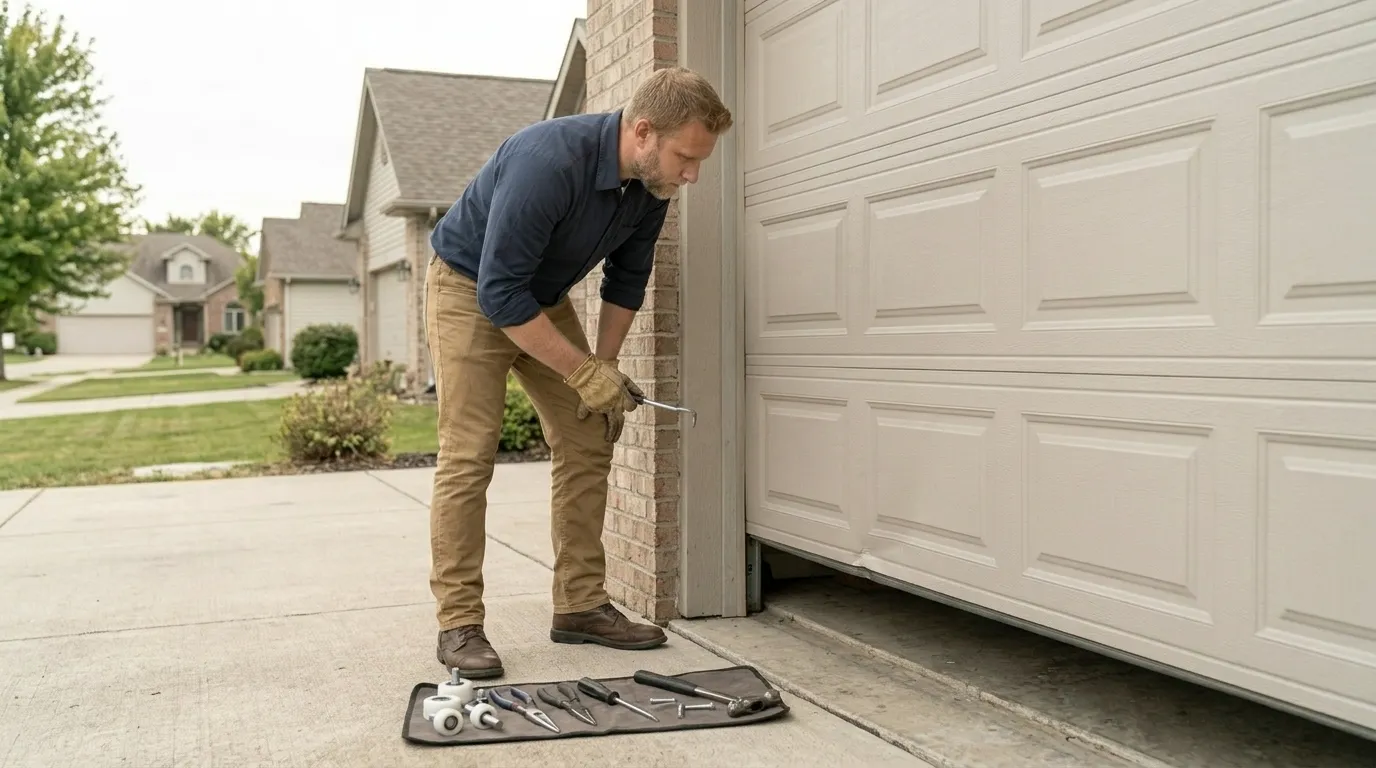
A door that grinds, hangs at an angle, or won't fully close is telling you something specific if you know what to look for. A gap that opens wider on one side than the other as the door travels usually means a roller has left the track on that side. A door that shudders and stops partway, then reverses on its own, is often the opener's safety sensor reacting to that same misalignment, not a separate opener fault.
If the door came off track after a specific hit, like a car bumper catching the bottom panel, the track near that spot is the first thing to inspect for a bend. If it happened with no obvious cause, worn or corroded rollers and loosened bracket screws are more likely, and that's consistent with hardware that's been in place since the house was built in the late 1950s.
Either way, don't keep running the opener once a roller is visibly out. Forcing it usually turns a track fix into a track replacement.
Talk to a Pico Rivera Technician First
Describe what the door is doing and get a straight answer on what it likely needs.
Other Garage Door Services in Pico Rivera
Recent Work in Pico Rivera
A look at jobs our crew has been on nearby.
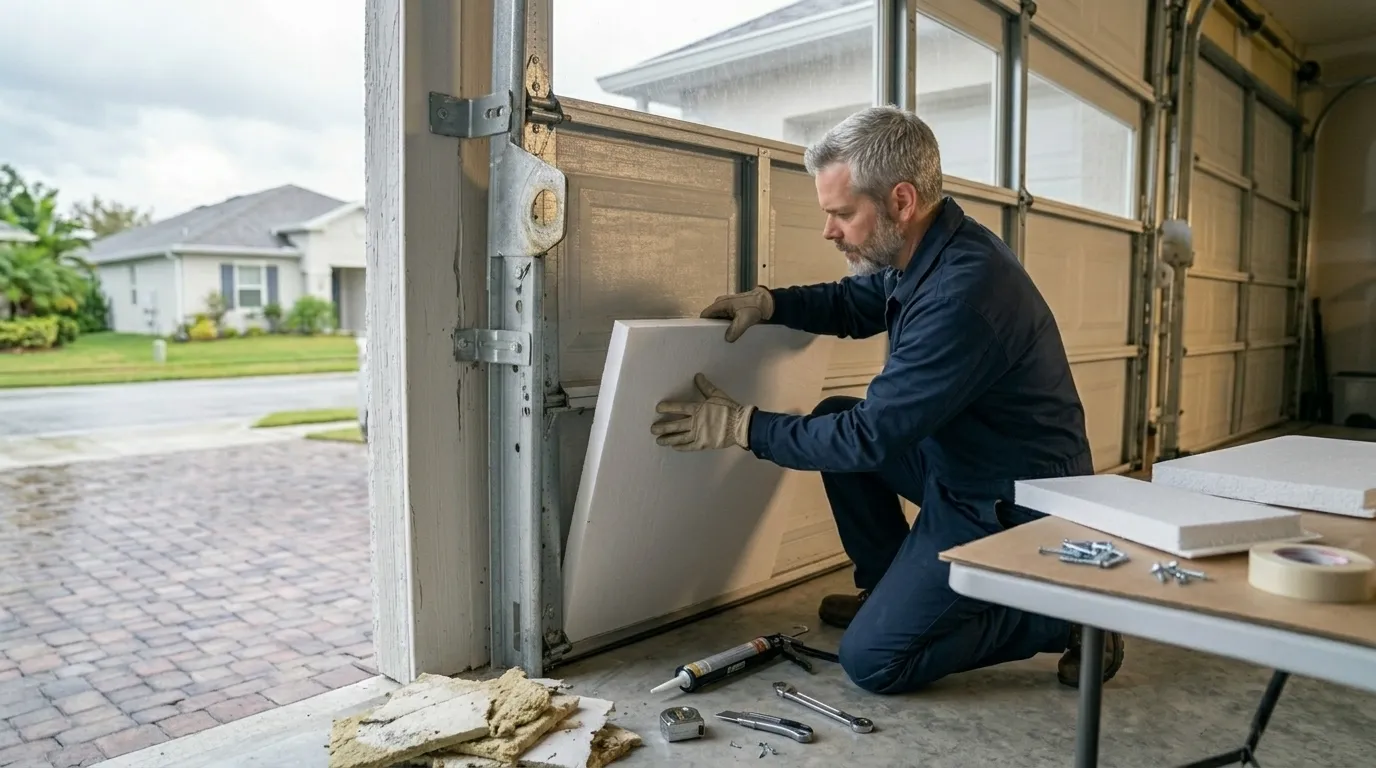
Why Pico Rivera Calls Us
Frequently Asked Questions
Is an off-track door always a spring problem too?
Not always, but it's common enough that we check spring balance every time. If the door drifts to one side or feels heavier on one edge when moved by hand, an uneven spring is likely part of why the roller jumped in the first place, not just a coincidence.
My house was built in the late 1950s. Does that make this repair different?
Often, yes. Original track and rollers from that era were sized for lighter doors. If the door has since been upgraded to a heavier insulated model, the old hardware may be undersized for it, and that mismatch is a common reason rollers pop out of track.
Do you have a branch in Pico Rivera?
No. We're based in Glendale and travel out to Pico Rivera, about 16 miles away, for this kind of job. There's no local depot here, so scheduling is set around the drive, not a same-block response.
Can I just push the roller back in myself?
Only if the door is fully down and the opener is disconnected, with no tension on the system. If the door is up or moving at all, the spring is doing work you can't see, and that's not something to handle without knowing its condition first.
Need Off-Track Repair in Pico Rivera?
Call now for straight answers on cost and timing.