
Service
Off-Track Garage Doors: Why Glendale Sees So Many
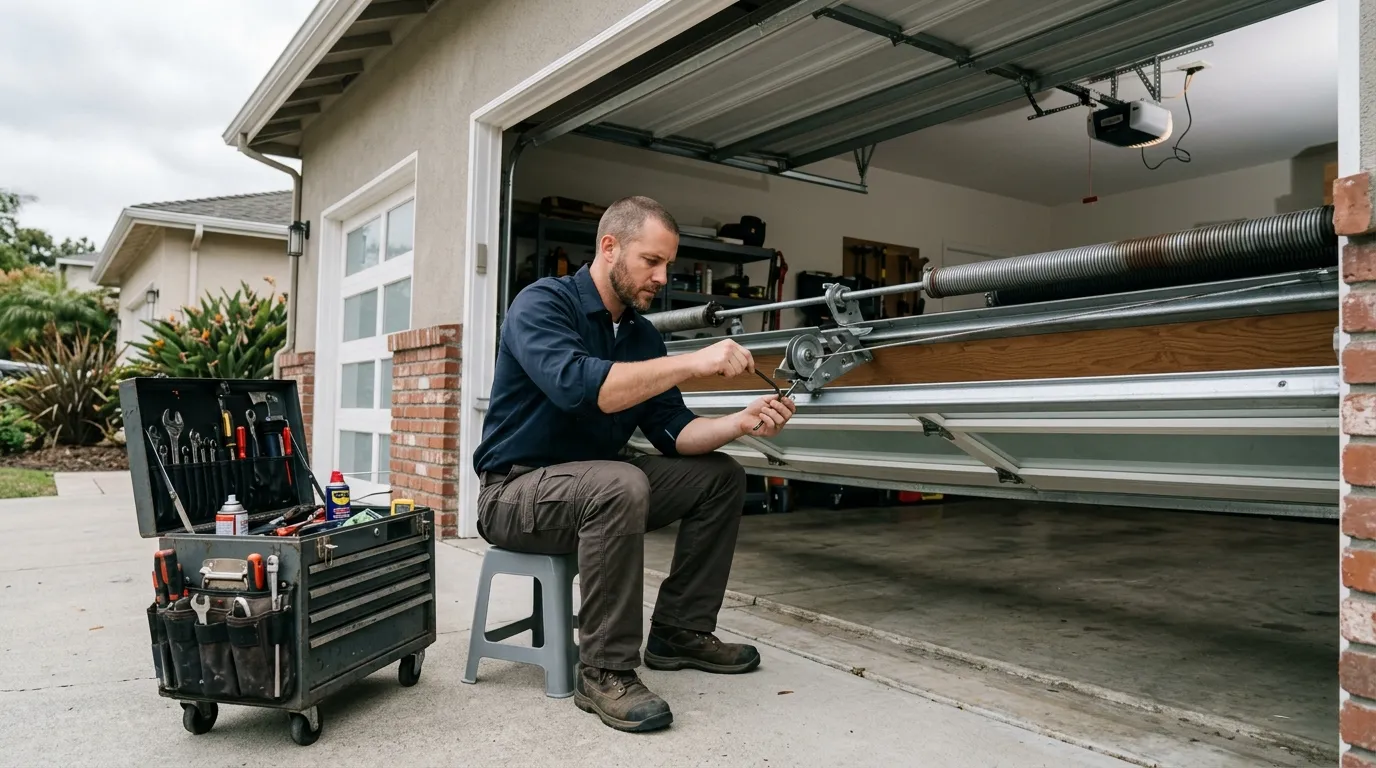
Glendale Garage Door Co fixes off-track doors on the pre-1960 torsion and rail hardware common across Glendale's older housing stock. Same-day diagnosis.
- Licensed & Insured
- Same-Area Service Calls
- Upfront Pricing
What Happens When You Call
-
1
Call or Request a Quote
Tell us what the door is doing and roughly how old the house is - that alone points us toward the likely part before a truck leaves.
-
2
On-Site Diagnosis
A tech checks the spring, cables, tracks, and opener in person and tells you plainly what is actually wrong.
-
3
Straight Price, No Surprises
You get a number before any work starts. It covers parts and labor, nothing added after the fact.
-
4
Fixed the Same Visit
Most repairs are done in one trip. If a part needs sourcing, we tell you that upfront instead of guessing.
Why It Happens Here
Most of the houses this company works on went up between 1943 and 2012, with a median build year of 1958, and across the 52 named areas we cover, the stock leans heavily pre-1960. That matters for a door coming off its track, because a track only comes off when something upstream lets go first - a bent roller, a loose bracket, a cable that's jumped its drum, or a bottom bracket worn out from decades of the same door going up and down. Houses built in the 1950s and early 1960s in this part of the county often still have their original rail alignment and mounting hardware, shimmed and re-shimmed over the years rather than replaced.
That kind of patch job holds until it doesn't. Add a mild temperate climate with no hard freeze-thaw cycle, and you'd think the metal would age slowly - it does, but slow corrosion on a track bracket that's 60-plus years old still ends the same way: a door that jumps the rail on a Tuesday morning. We see this pattern often enough in the pre-1960 tract housing across this service area that it's one of the more predictable calls we get, not a random failure.
What You Are Seeing
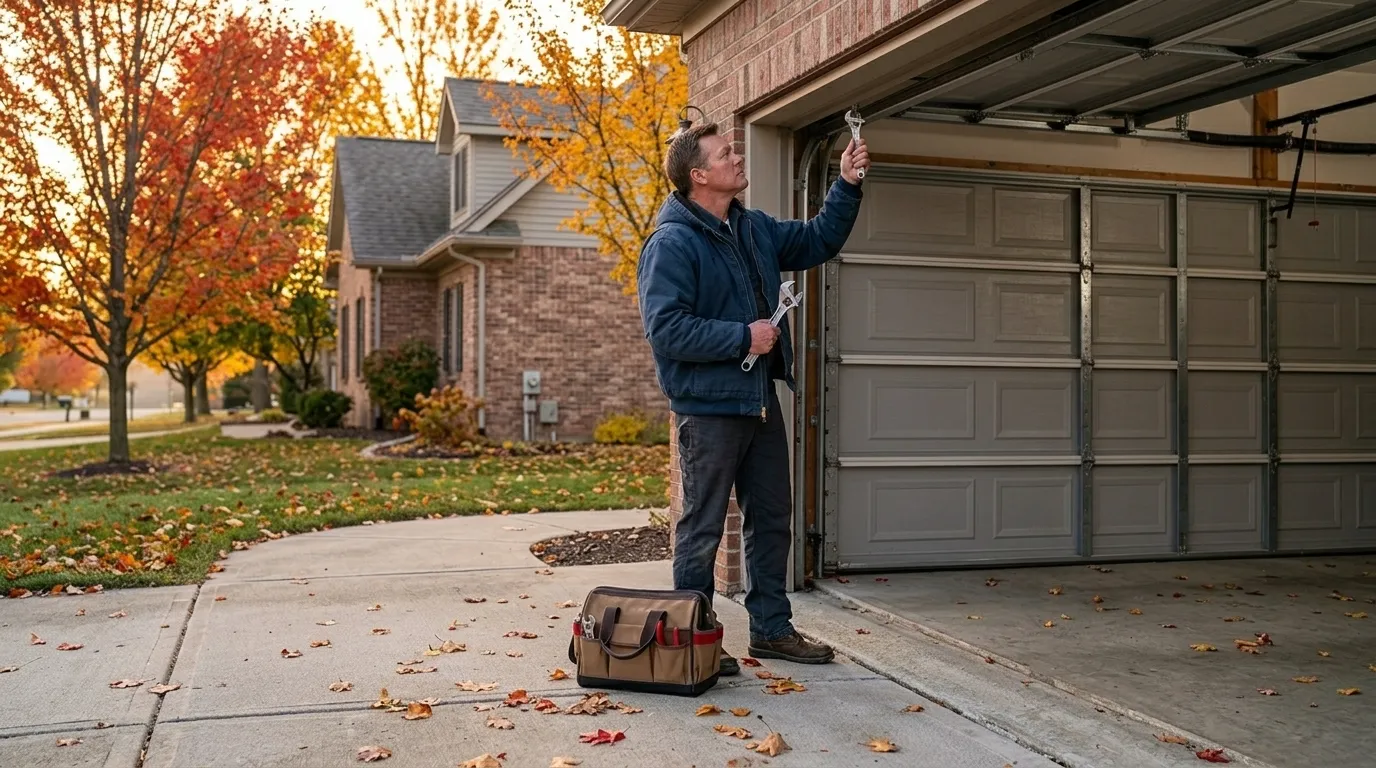
An off-track door usually announces itself before it fully leaves the rail. You might notice the door running crooked, one side dropping faster than the other, or a gap opening between the bottom panel and the track on one side. Sometimes it's a loud pop followed by the door stopping dead, stuck half-open or half-closed.
Other times the door looks fine sitting still but grinds or shudders partway through the cycle - that's usually a roller that's already off the rail and dragging. If you can see daylight between the roller and the track, or the door is visibly tilted in its opening, stop running the opener. Running a door on a compromised track can bend the track further, crack a panel, or snap a cable under load.
None of that is worth saving a service call.
What the Fix Involves
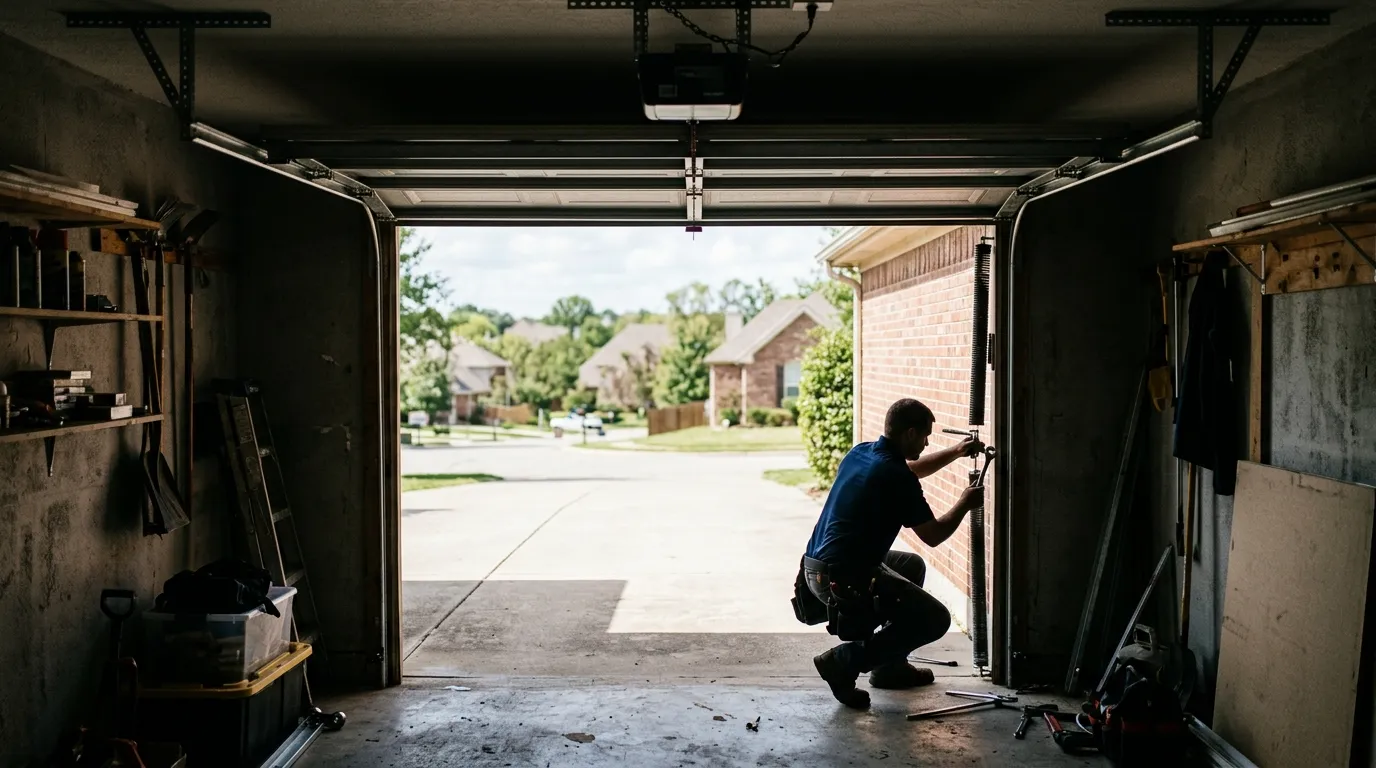
The actual repair depends on how far things have gone. If a roller has simply jumped the track and the track itself is straight, it's often a matter of releasing tension, guiding the door back onto the rail, and checking the rollers and brackets for wear before running it again. If the track is bent - which is common once a heavy door has been running crooked for even a day or two - that section needs to come off and be replaced, not hammered back into shape.
Bent track rarely holds a second time. We also check the cables, the bottom brackets, and torsion spring tension while we're in there, because on older hardware one worn part usually explains why the others gave out too. One thing we won't do: force a door back onto a track that's already cracked at the weld.
That's a full track replacement, and trying to save it just moves the failure to a worse day.
Where This Job Goes Sideways
The jobs that turn into bigger repairs are almost always ones where the door kept running after it came off track. A homeowner hits the opener button a few more times trying to "walk" it back on, and that's when a cable snaps or a panel cracks against the frame. On the older torsion hardware still found on a lot of houses from the 1950s and 60s in this service area, the springs are also under real tension, and a door hanging half off its track with a wound spring is not something to troubleshoot yourself.
We'd rather get a call for a simple off-track door than a call after someone's tried to force it and turned a one-part fix into a three-part one. If your opener is still trying to drive the door when it's off the rail, unplug it and wait for the truck.
Talk to a Technician Before You Book
Describe what the door is doing and get a straight answer on what it likely needs.
Jobs Like Yours
Recent work from this service line.
Why Glendale Calls Us
Frequently Asked Questions
Can I fix an off-track garage door myself in Glendale?
If it's just a roller that popped off a straight track, sometimes yes, but with the door under spring tension it's easy to get hurt or bend the track further. Given how much of the housing stock here has original 1950s-60s hardware, we'd rather look at it first.
Why does this happen more in older Glendale neighborhoods?
Homes with a median build year of 1958 often still run original track and bracket hardware that's been shimmed rather than replaced. Decades of wear on brackets and rollers eventually let a door jump the rail, a pattern we see often in the pre-1960 stock across this service area.
Is a bent track always a full replacement?
Usually, yes. Once a track has bent under a running door, straightening it rarely holds. We replace the bent section and check the rest of the hardware, since on older installs one worn part often explains why another one failed.
How fast can someone come look at an off-track door?
We don't quote a response time we can't back up, so ask when you call. What we can tell you is not to keep running the opener once the door is visibly off the rail.
Need Off-Track Garage Doors: Why Glendale Sees So Many?
Call now for straight answers on cost and timing.