
Service
Commercial Garage Door Service Across Glendale, CA
Commercial roll-up and sectional door repair for Glendale, CA businesses, sized for older buildings and the district's mild-climate wear patterns on tracks and springs.
- Licensed & Insured
- Same-Area Service Calls
- Upfront Pricing
What Happens When You Call
-
1
Call or Request a Quote
Tell us what the door is doing and roughly how old the house is - that alone points us toward the likely part before a truck leaves.
-
2
On-Site Diagnosis
A tech checks the spring, cables, tracks, and opener in person and tells you plainly what is actually wrong.
-
3
Straight Price, No Surprises
You get a number before any work starts. It covers parts and labor, nothing added after the fact.
-
4
Fixed the Same Visit
Most repairs are done in one trip. If a part needs sourcing, we tell you that upfront instead of guessing.
Why It Happens Here
Glendale, CA sits inside a service area where housing went up mostly between 1943 and 2012, with the median build year landing around 1958, and that same stretch of development runs across 52 named neighborhoods and nearby cities from La Cañada Flintridge to Downtown Los Angeles. Commercial strips, light-industrial yards, and loading docks built into that same era of growth carry hardware sized for the trucks and doors of their time, not the heavier steel sectional doors many businesses run today.
The climate band across this service area is mild temperate - no deep freeze, but steady day-to-night swings that expand and contract steel track and header brackets year after year. On a commercial door that cycles ten or twenty times a day, that slow metal movement works loose lag bolts and throws tracks out of plumb faster than it would on a door that opens twice. Add in the dust and grit that settles on exposed rail in a loading bay, and you get bind points that show up first as noise, then as a door that hangs up six inches from the floor.
None of this needs a storm or a hard freeze. It's just cycles, dust, and time working on hardware that was never built for the load it's carrying now.
What You Are Seeing
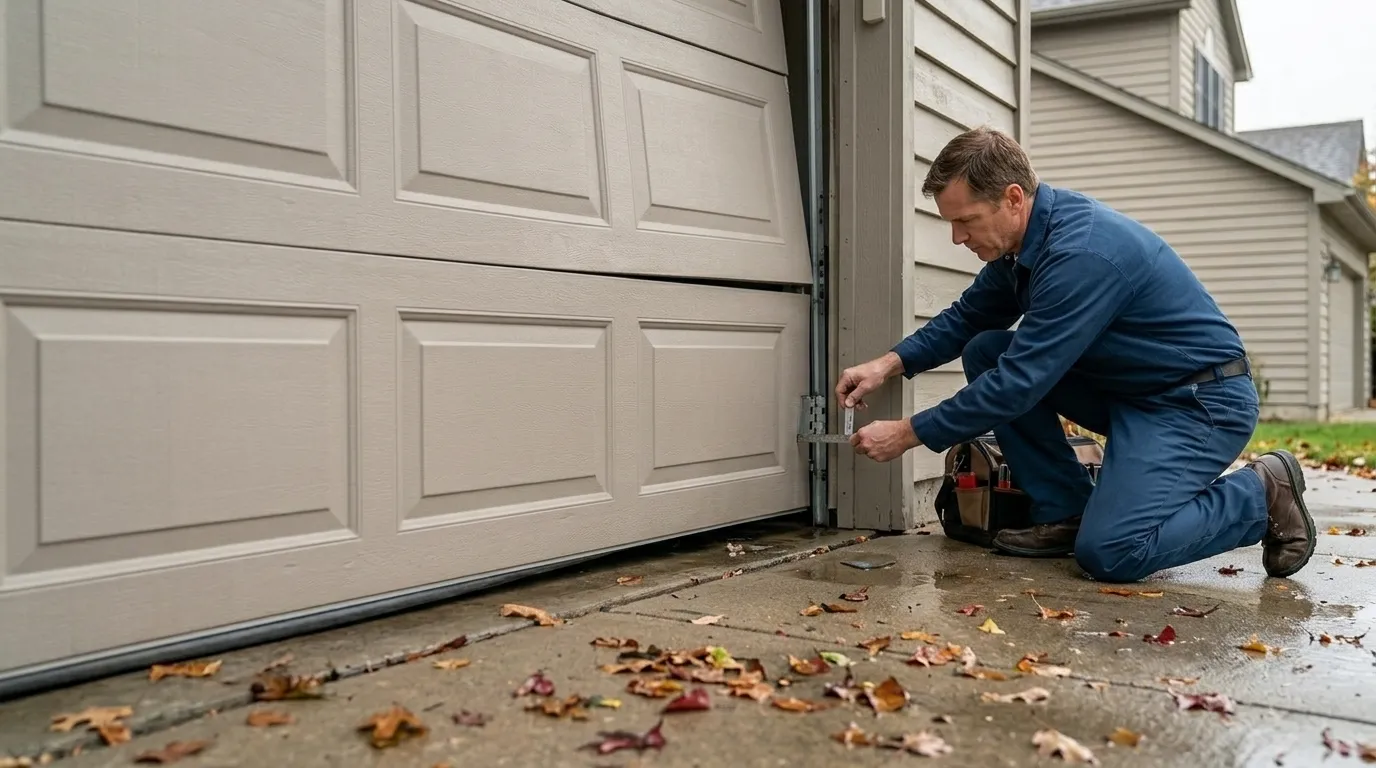
Most calls start the same way: the door runs fine for a week, then starts catching at one spot on the track, always the same spot. That's a section binding against a rail that's shifted out of parallel - common on older commercial mounts where the header bracket has worked loose from repeated thermal cycling.
On heavier steel doors, you'll also hear the opener strain before you see anything wrong - a motor that used to open the door in four seconds now takes six, and the chain or belt slaps on the way down. That's a torsion spring losing tension under a load it was never sized for, or a duty-cycle motor running past what it was rated to do in a single shift.
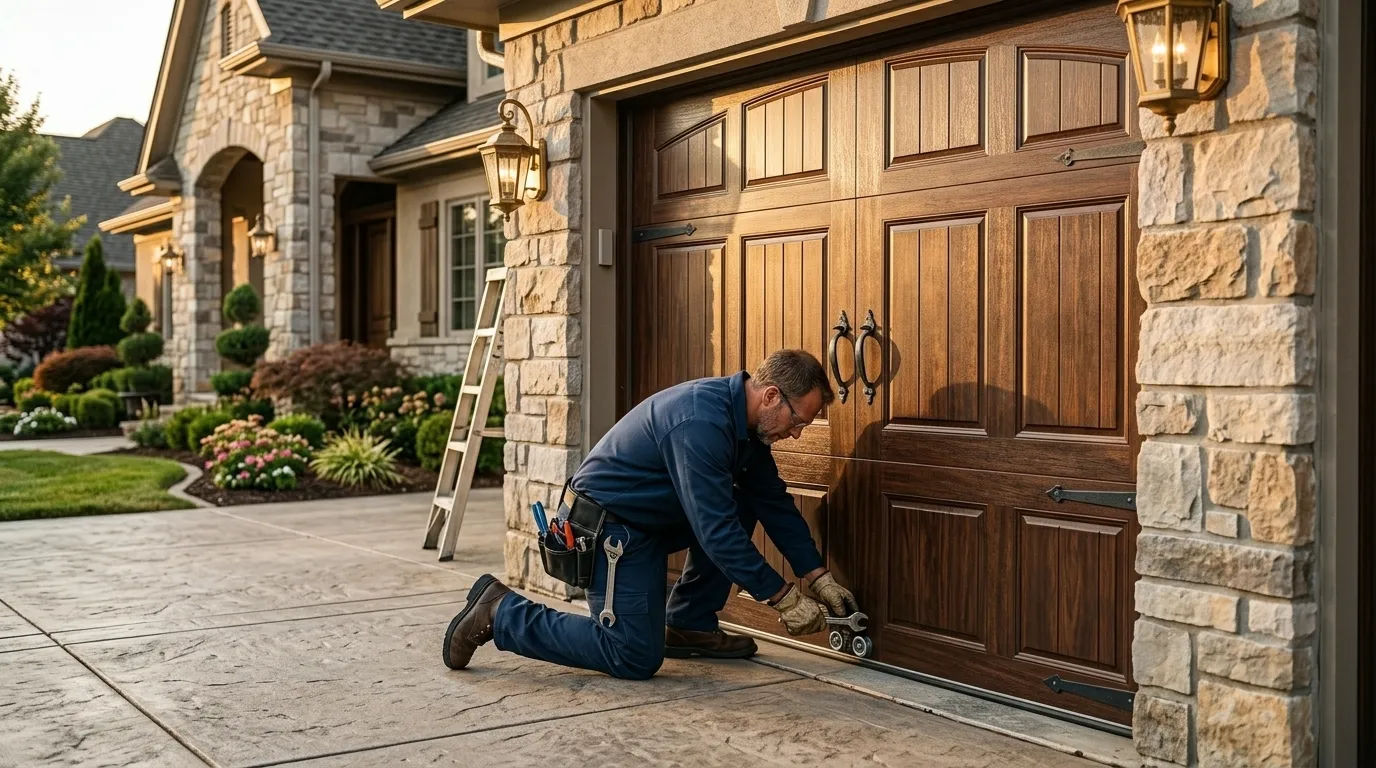
Cables fraying at the drum, rollers that have gone flat on one side, and a bottom seal that's cracked from UV exposure round out the common list. None of these are dramatic failures. They're wear patterns that build slowly across a mild climate with no real off-season, and they show up first as a five-second delay, not a dead door.
What the Fix Involves
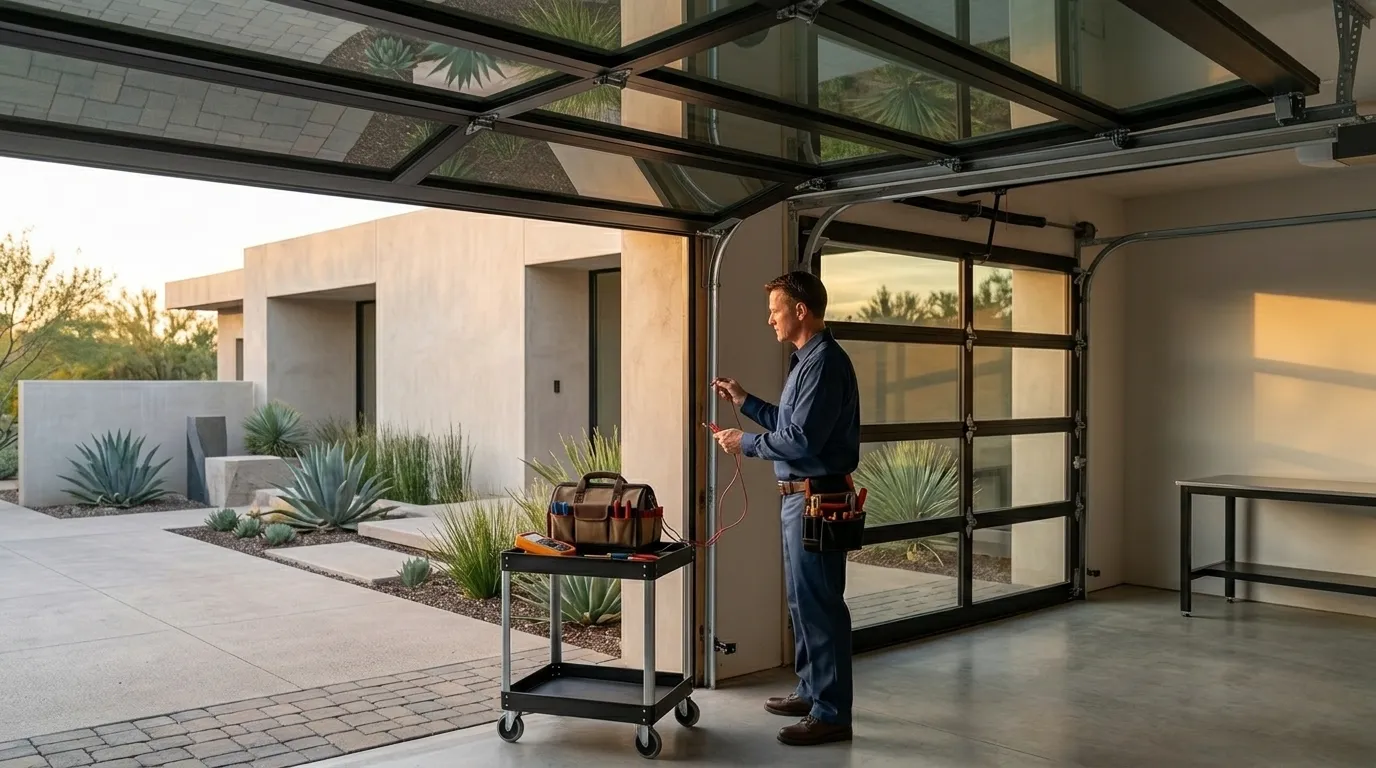
For a bind at one point on the track, the fix is realignment - checking the header bracket, re-plumbing the vertical rail, and confirming the horizontal track pitches correctly toward the back wall. That's a measuring job as much as a wrench job.
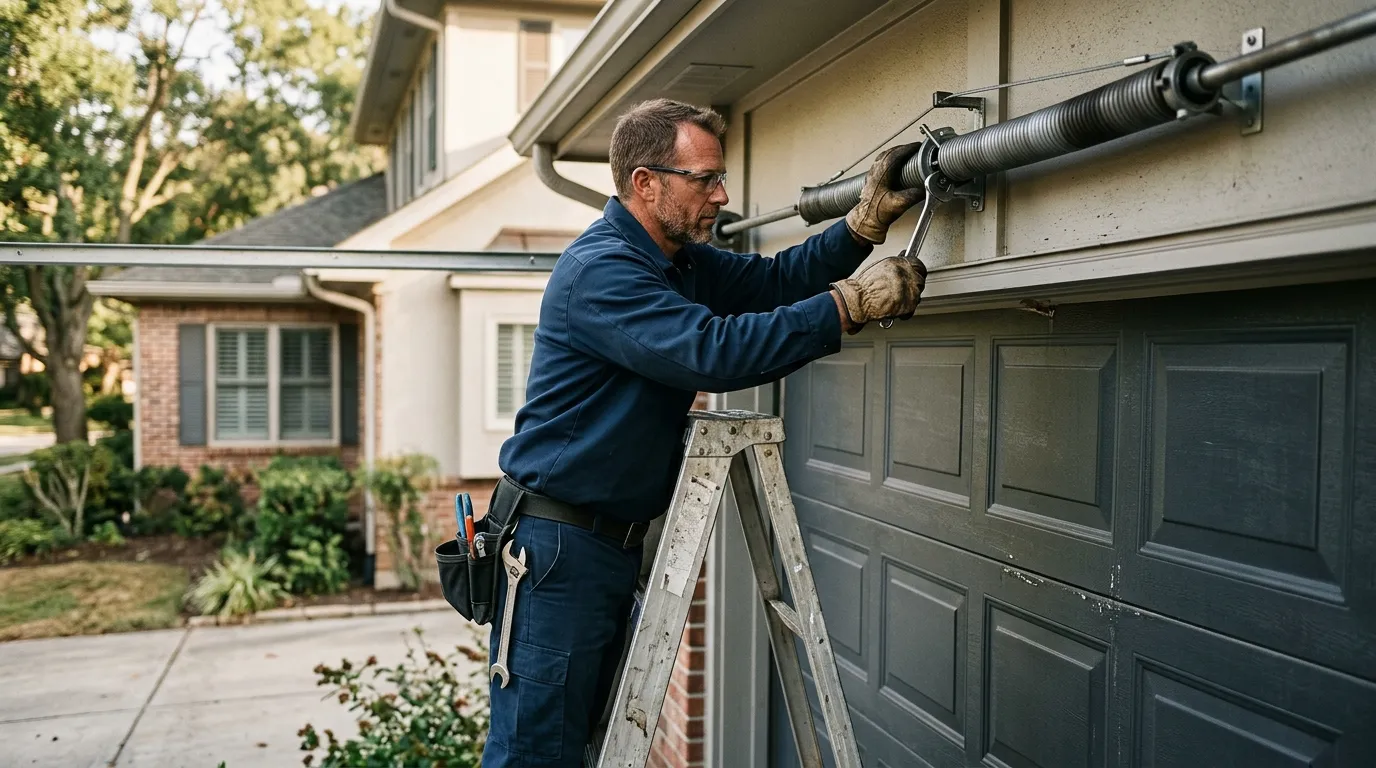
For spring failure on a heavier commercial door, we size the replacement to the actual door weight, not to whatever spring happened to be on it before. A lot of the older track systems (per the build-out era across this service area, F1/F2) were spec'd for lighter doors than what's hanging on them now, so matching the old spring is often the wrong call.
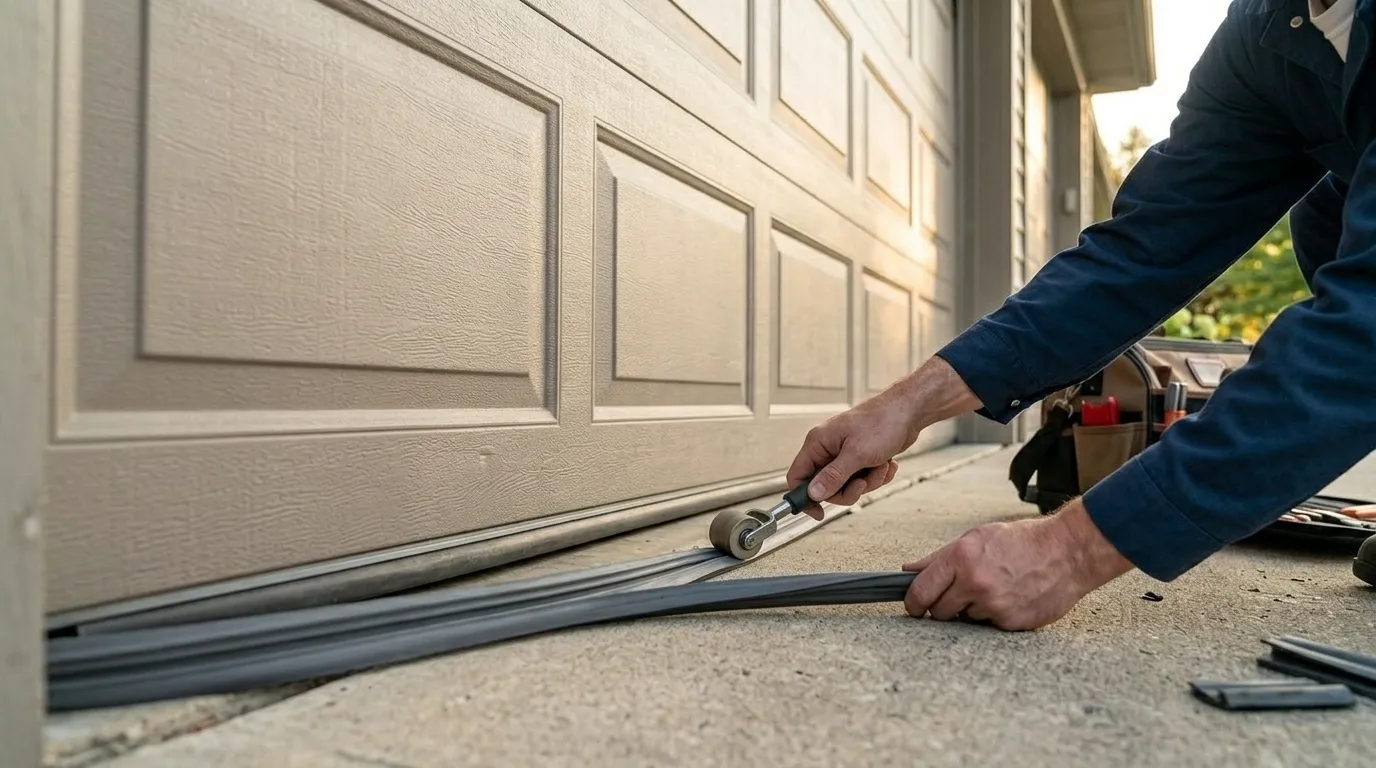
Cables, rollers, and seals get replaced on a straightforward swap - there's no shortcut that makes those last longer once they've started fraying or flattening. Where the opener is undersized for the cycle count a business is actually running, we'll say so before doing anything else, because a new spring on an undersized motor just moves the failure point somewhere else.
Where This Job Goes Sideways
The honest limitation: if the track or header framing has warped from years of misalignment, straightening it can cost more in labor than replacing the section outright, and we'll tell you that math before we start rather than after. We also don't stock every duty-cycle motor size on the truck - a heavy-use opener replacement sometimes means a parts order, not a same-day fix, and we'd rather say that up front than promise a truck roll that can't deliver.
The other place this goes sideways is when a business waits until the door won't move at all. A door that's binding intermittently is a controlled repair.
A door that's slammed shut on a failed cable with a truck half-loaded underneath is a different, more expensive job, and sometimes a safety call before it's a repair call. Catching the noise and the delay early, on any door in this service area, is what keeps it a track adjustment instead of a full section replacement.
Talk to a Technician Before You Book
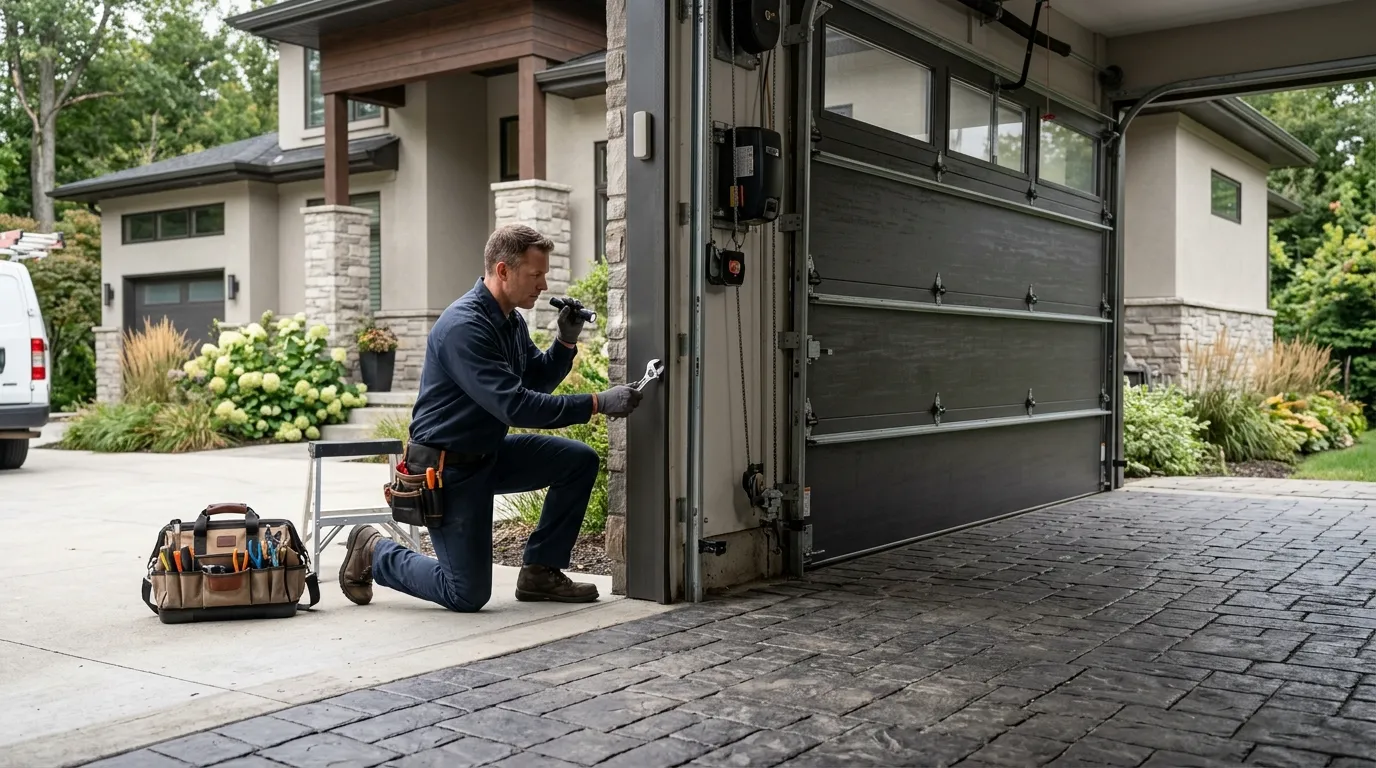
Describe what the door is doing and get a straight answer on what it likely needs.
Jobs Like Yours
Recent work from this service line.
Why Glendale Calls Us
Frequently Asked Questions
Why does our commercial door keep binding at the same spot every time?
That's almost always a track or header bracket that's shifted, not the door itself. In this service area's mild climate, steady temperature swings work lag bolts loose over years of cycling, so the rail drifts a fraction out of plumb. It always catches at the same point because that's where the drift is worst.
Is our opener actually too small for the door?
Possibly, if the door is a heavier steel sectional than the building's original hardware was built for. A lot of commercial buildings across this service area date to a build-out era centered around the late 1950s, and older openers sized for that era can be underpowered for today's cycle counts.
Do you carry heavy-duty commercial openers on the truck?
Not every size. Standard springs, cables, and rollers are stocked, but a heavy-duty duty-cycle motor sometimes needs to be ordered. We'll tell you that at the estimate, not after we've already started the job.
How often should a commercial door get checked if it runs several cycles a day?
There's no set number in what we can promise you, but a door running many cycles a day wears track hardware and springs faster than a residential door. Catching a bind or a slow motor early, before it fails outright, is the difference between an adjustment and a full section replacement.
Need Commercial Garage Door Service Across Glendale, CA?
Call now for straight answers on cost and timing.