
Service
Installing a New Garage Door in a Pre-1960 Glendale Home
Replacing an original 1950s-60s garage door in Glendale? See what installation involves for pre-1960 housing stock and mild-climate hardware wear here.
- Licensed & Insured
- Same-Area Service Calls
- Upfront Pricing
What Happens When You Call
-
1
Call or Request a Quote
Tell us what the door is doing and roughly how old the house is - that alone points us toward the likely part before a truck leaves.
-
2
On-Site Diagnosis
A tech checks the spring, cables, tracks, and opener in person and tells you plainly what is actually wrong.
-
3
Straight Price, No Surprises
You get a number before any work starts. It covers parts and labor, nothing added after the fact.
-
4
Fixed the Same Visit
Most repairs are done in one trip. If a part needs sourcing, we tell you that upfront instead of guessing.
Why It Happens Here
Most houses in Glendale went up between 1943 and 2012, with a median build year of 1958, which means a lot of garages still have the openings, jambs, and single-layer wood doors sized for the cars and habits of that era. Across the area's 52 named neighborhoods, the stock runs mostly pre-1960, so the door you're replacing was likely never designed to carry an opener, let alone an insulated steel section that weighs three or four times what the original panel did.
Glendale sits in a mild temperate band, which is a break in some ways - no snow load, no hard freeze cracking wood joints - but it also means decades of daily sun-cycling on a door that was never sealed for it. Wood swells and dries out on a loop, hinges pull loose, and by the time an owner calls us it isn't a spring adjustment, it's a full swap. That's the pattern behind most installation calls here: not storm damage, just age catching up with hardware built for a different house.
What You Are Seeing
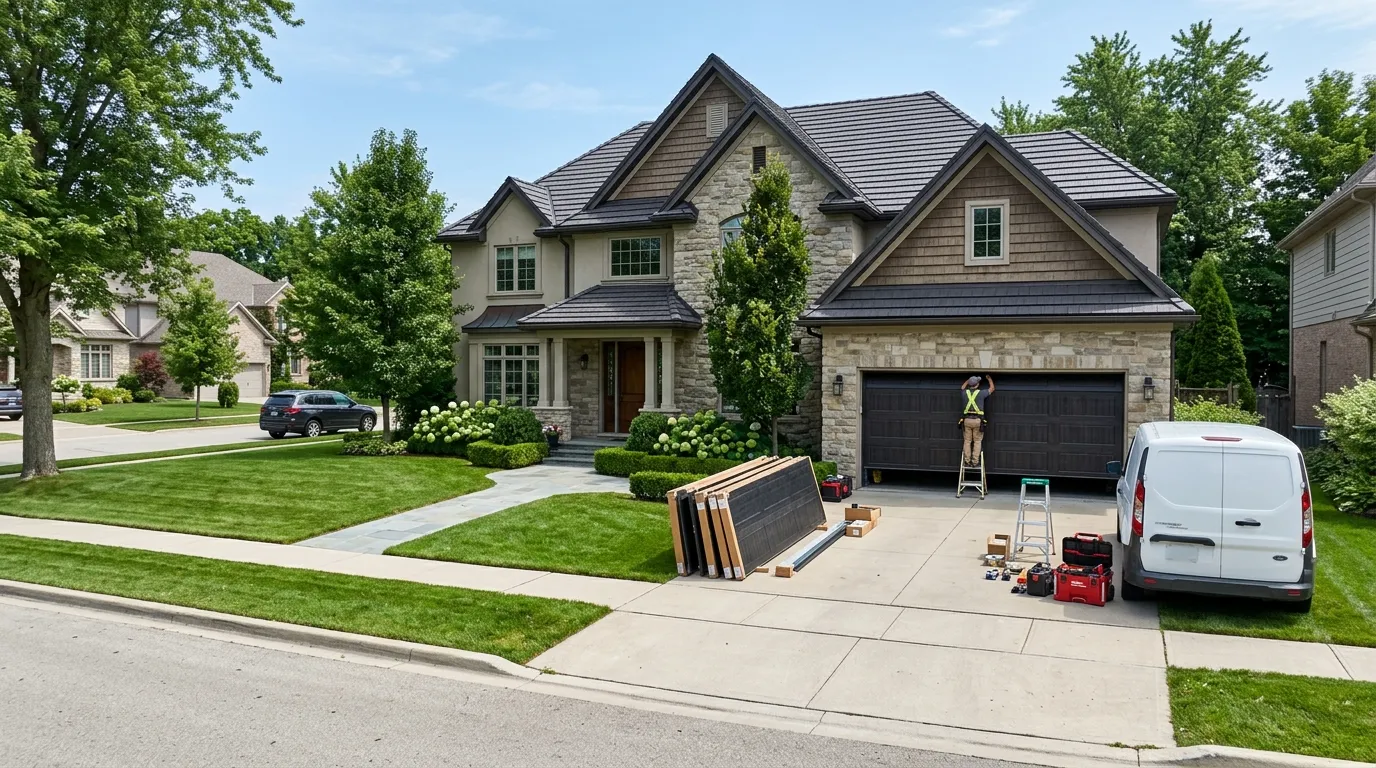
On the older stock, the tell is usually a door that doesn't sit flush anymore - daylight along the bottom seal, panels that have cupped or split from years of sun exposure, and a track that was bent trying to compensate for a door frame that's shifted slightly out of square as the house settled. If there's an opener bolted on, it's often a retrofit added years after the original build, wired into a door and track that weren't speced for the extra stress of motorized lift.
Some owners come to us because the door still moves but groans doing it, or the spring looks stretched and mismatched to the panel weight. Others have a door that's structurally fine but simply doesn't insulate or seal the way a newer double-wall steel door does, and they want the upgrade rather than another patch. Either way, on a house from the 1950s or 60s, this is rarely a five-minute fix - the whole assembly is usually original.
What the Fix Involves
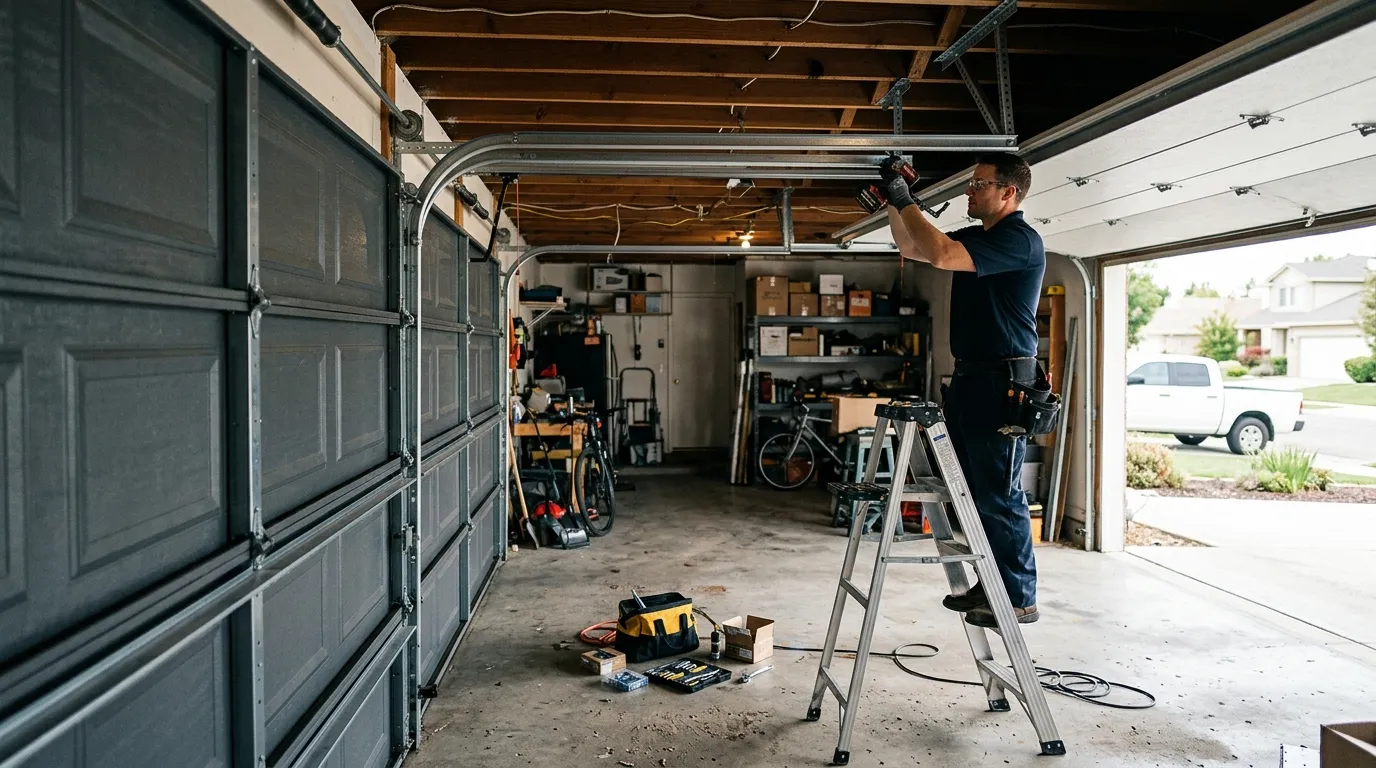
A real installation on an older Glendale opening starts with measuring the actual rough opening, not assuming it matches a standard size - a lot of these garages were framed before doors came in today's common widths, so the new door and track sometimes need field adjustment to fit cleanly. We pull the old track and spring assembly entirely rather than reuse it, since matching a new torsion spring to an old, undersized shaft is how doors end up unbalanced within a year.
Because Glendale's climate is mild rather than harsh, we're not fighting snow load or ice in the sizing, so the spec leans more on panel weight and daily heat exposure than storm resistance. That keeps material choice - steel, aluminum, insulated or not - mostly a matter of what the owner wants for noise and temperature inside the garage, not a code requirement driven by weather. Wiring for an opener, if one's going in, gets run to current code rather than tied into whatever was patched in decades ago.
Where This Job Goes Sideways
The most common surprise on older houses is a jamb or header that's rotted or shifted enough that the new door won't hang square without carpentry work first - framing repair isn't something we do as part of a door install, so if we find that, we'll tell you before we order the door, not after. Low headroom is another one: some of these garages were built with just enough clearance for the original low-profile hardware, and a standard torsion setup won't fit without a low-headroom kit or a different spring configuration.
We've also run into openings that are slightly out of square from decades of foundation settling, which means the door has to be shimmed and the track adjusted by eye rather than by the book. None of that is unusual in housing from this era, but it does mean an installation quote based on a phone description can shift once we're standing in the opening. That's the one honest limit here: we can spec the door accurately, but we can't fully price the labor until we've seen the actual frame.
Talk to a Technician Before You Book
Describe what the door is doing and get a straight answer on what it likely needs.
Jobs Like Yours
Recent work from this service line.
Why Glendale Calls Us
Frequently Asked Questions
Will a new garage door fit my original opening from the 1950s or 60s?
Often it needs adjustment. A lot of Glendale's older housing predates today's standard door widths, so we measure the actual rough opening before ordering anything. Sometimes the new door and track fit as-is; sometimes the jamb needs minor carpentry first. We flag that during the site visit, not after the door arrives.
Does Glendale's mild climate change what door I should install?
It changes the priorities. We're not sizing for snow load or hard freeze here, so material choice comes down to noise, insulation for temperature inside the garage, and how the panel holds up to daily sun exposure rather than storm resistance. Steel, aluminum, and insulated options all work fine in this climate band.
How do I know if I need a repair or a full installation?
If the opener and hardware still run smoothly and it's one damaged panel or a worn seal, repair is usually the cheaper route. If the spring is mismatched to the door weight, the track is original and bent, or the panels are sun-cracked across the board, a full installation tends to hold up longer than patching an assembly built for a lighter, older door.
Can you tell me the cost over the phone?
Not accurately, no. Once we've measured the opening and checked whether the jamb, headroom, and framing are standard, we can quote a firm price. Houses from this era vary enough in opening size and condition that a phone estimate would just be a guess.
Need Installing a New Garage Door in a Pre-1960 Glendale Home?
Call now for straight answers on cost and timing.