
Service
Garage Door Maintenance Built Around Glendale's Housing Stock
Glendale's pre-1960 housing stock and mild climate create specific wear patterns on doors and openers. Here's what maintenance actually needs to cover here.
- Licensed & Insured
- Same-Area Service Calls
- Upfront Pricing
What Happens When You Call
-
1
Call or Request a Quote
Tell us what the door is doing and roughly how old the house is - that alone points us toward the likely part before a truck leaves.
-
2
On-Site Diagnosis
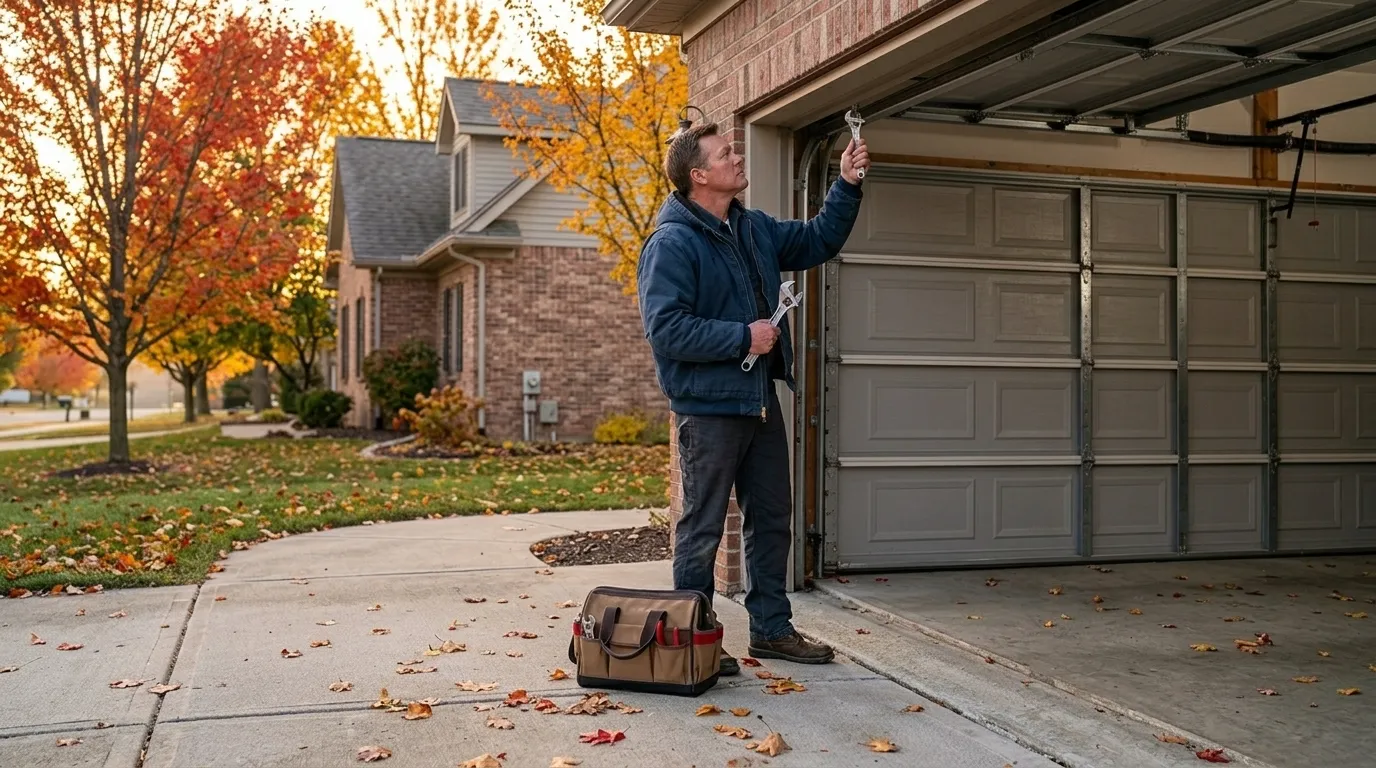
A tech checks the spring, cables, tracks, and opener in person and tells you plainly what is actually wrong.
-
3
Straight Price, No Surprises
You get a number before any work starts. It covers parts and labor, nothing added after the fact.
-
4
Fixed the Same Visit
Most repairs are done in one trip. If a part needs sourcing, we tell you that upfront instead of guessing.
Why It Happens Here
Most of the homes we work on across this service area went up between 1943 and 2012, with the median build year landing around 1958. That matters for maintenance because a door installed in the late 1950s or 1960s was built to a spec, a spring gauge, and a track tolerance that nobody manufactures the same way today. Across the 52 named areas we cover, the stock leans heavily pre-1960, which means a lot of original or near-original hardware still doing daily work decades past when it should have been serviced.
The climate here doesn't punish steel the way a freeze-thaw region does - this is a mild temperate band, no deep frost, no heavy snow load. That's the good news.
The bad news is that mild, dry conditions let dust and old grease bake into tracks and hinges instead of getting rinsed or frozen out, and it lets a slightly bent track or a fraying cable go unnoticed longer because nothing forces the failure the way a cold snap would elsewhere. The door just gets quieter, then louder, then it doesn't open.
Put those two things together - old hardware, mild weather that hides wear instead of exposing it - and you get doors that look fine right up until a spring lets go or a roller seizes mid-cycle.
What You Are Seeing
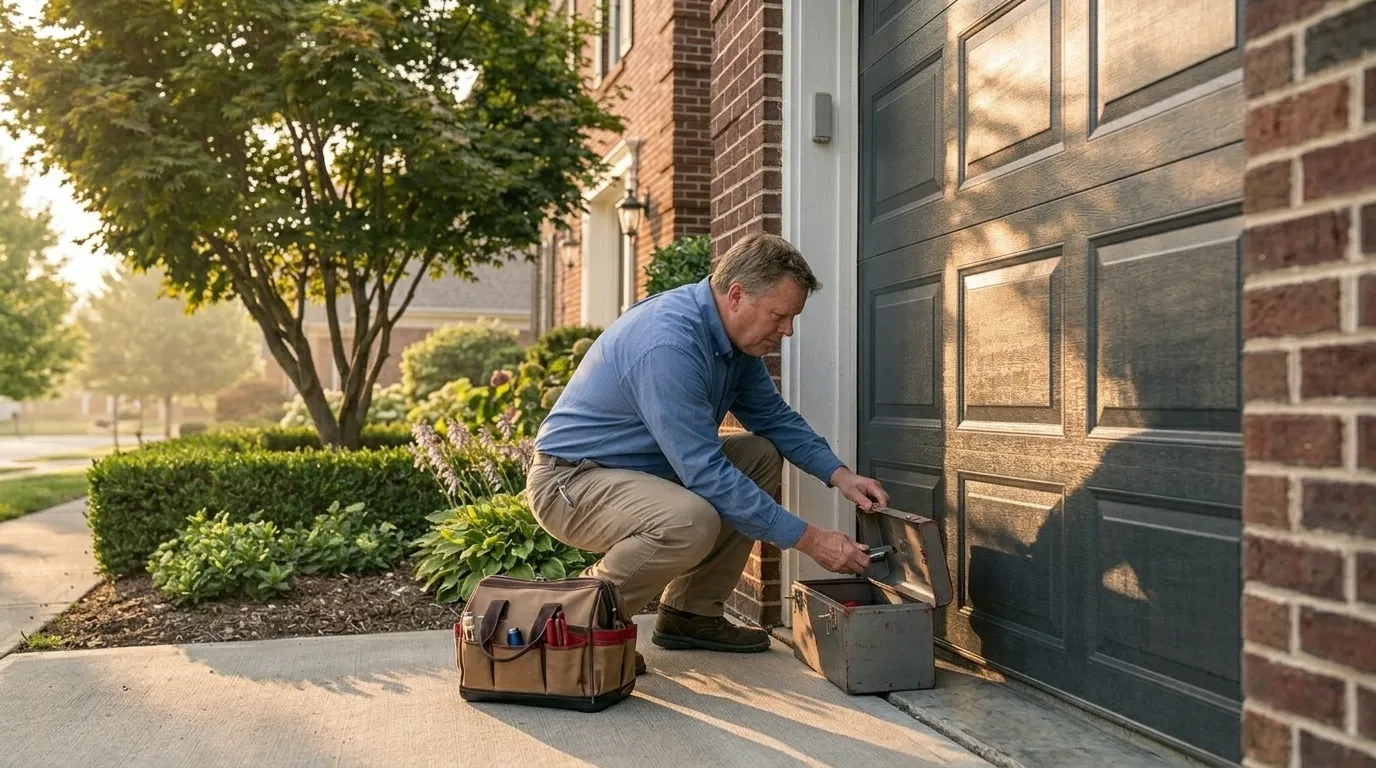
On older tracks, the first sign is usually noise: a grinding or popping on the way up that wasn't there six months ago. That's rollers wearing unevenly in track channels that have themselves worn slightly out of true over sixty-plus years of use. Next comes drag - the opener strains, the door hesitates a few inches off the floor, or it reverses on its own partway through a cycle because the safety sensor reads resistance that shouldn't be there.
On houses with original torsion or extension springs, the tell is a door that feels heavier than it used to, or one side that visibly sags when you lift it by hand with the opener disconnected. Cables can look fine and still be down to a few strands, because in this climate they don't rust through so much as they fatigue quietly.
A smaller but common one: openers original to a 1960s garage that have been retrofitted two or three times, where the wiring and the bracket don't quite match what's installed now. None of these are emergencies on day one. All of them get expensive fast if the maintenance visit keeps getting pushed.
What the Fix Involves
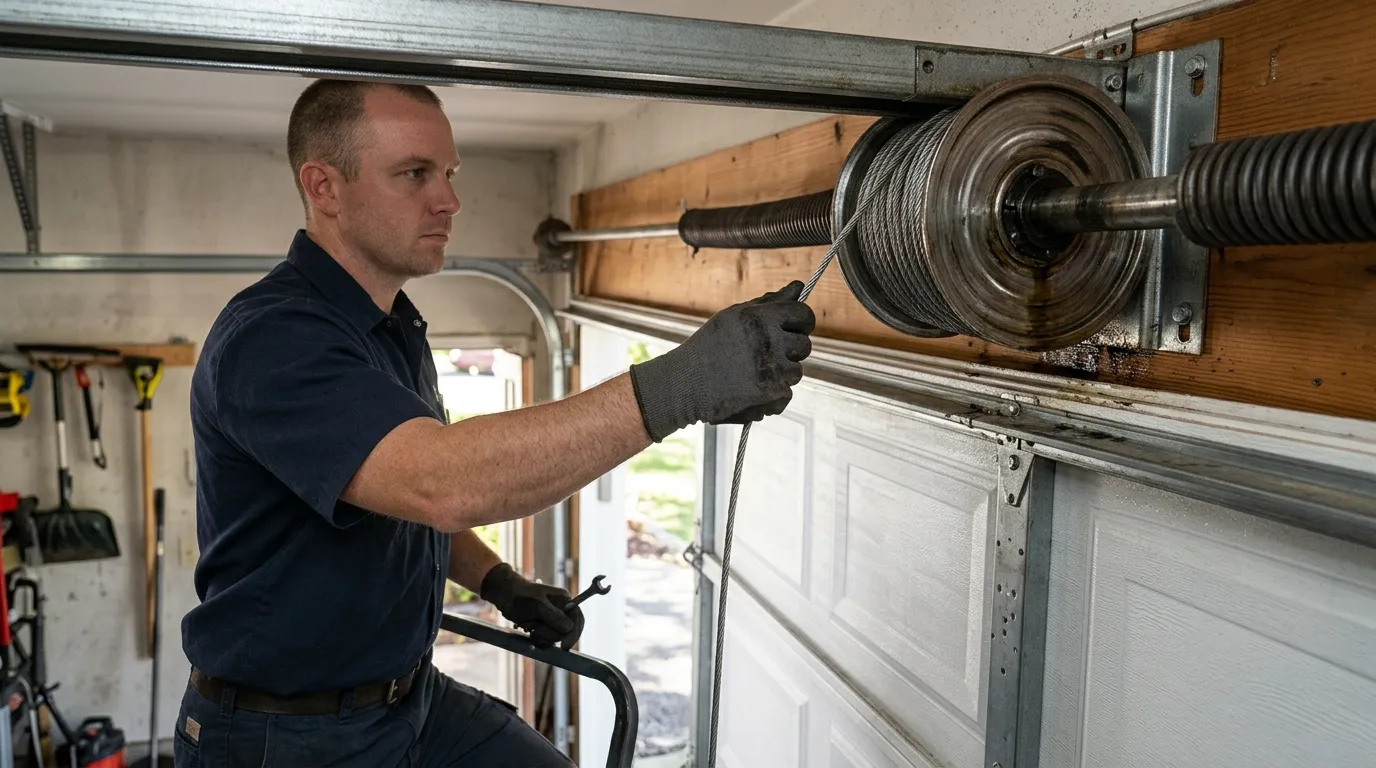
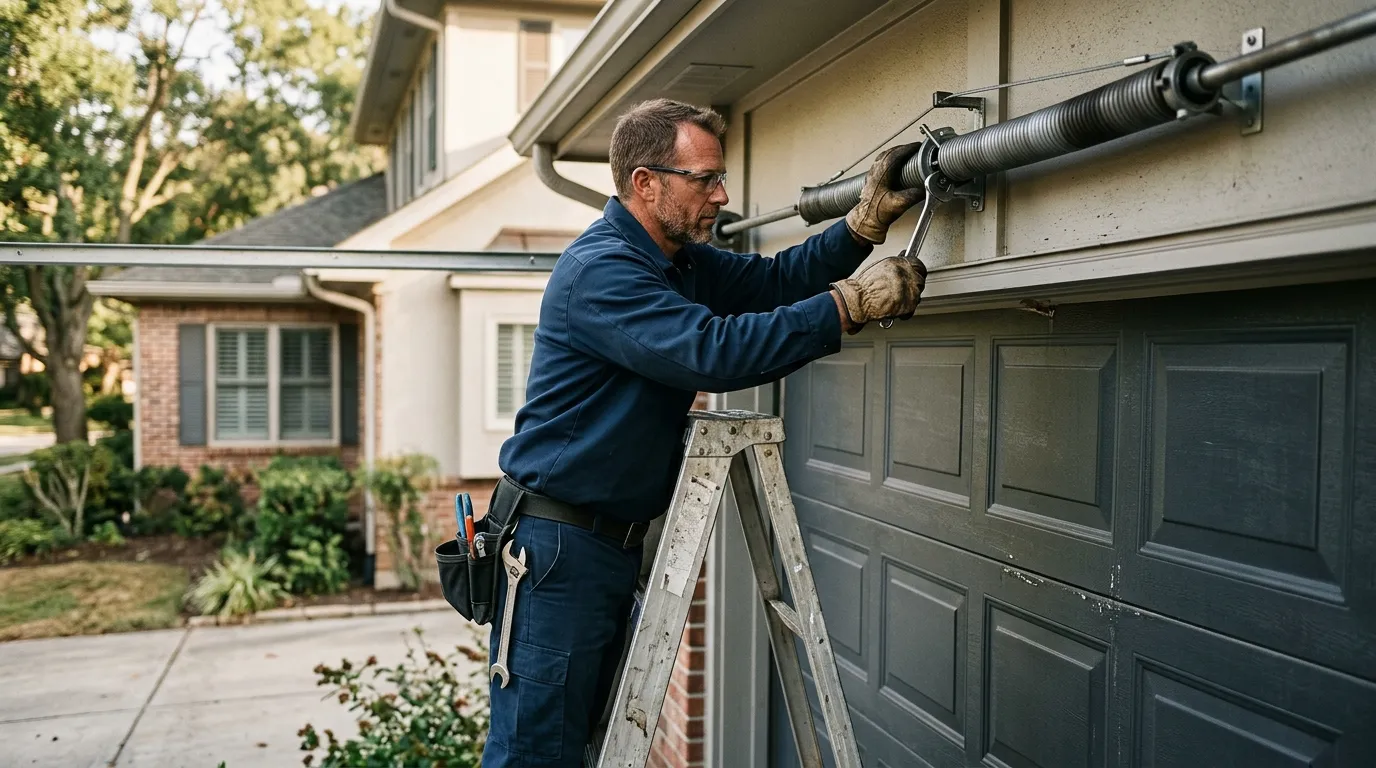
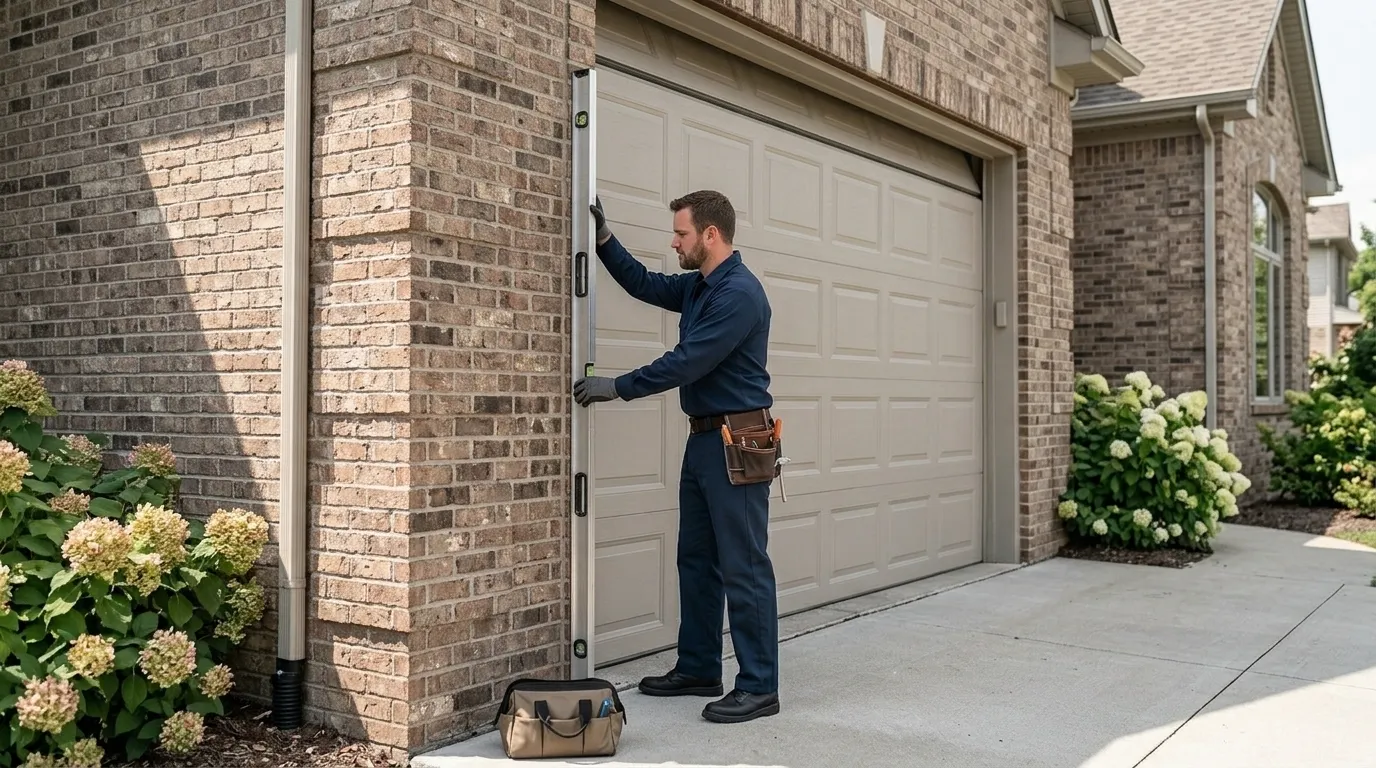
A real maintenance visit starts with the track and rollers, because on housing stock this age, misalignment is the most common root cause we find - not the spring, not the opener. We check the track for bow or gap against the frame, check roller wear, and re-set the alignment before touching anything else, since a spring or cable adjustment on a crooked track just fails again in a few months.
From there it's spring tension, cable condition, hinge and hardware torque, and opener force settings - checked against how the door actually moves, not against a factory spec sheet from decades ago that may not match what's on the house now. On original hardware, we're often working with parts that were never designed for the loads a modern insulated door section or heavier panel puts on them, so part of the job is flagging where the hardware is undersized for what's currently hanging on it, not just tightening what's there.
We'll be straight about one thing: if the springs are original and the door is original, a maintenance visit can buy time, but it won't make sixty-year-old torsion hardware behave like new hardware. Sometimes the honest recommendation coming out of a maintenance call is a hardware upgrade, not another tune-up.
Where This Job Goes Sideways
The most common mistake we see from other visits - DIY or otherwise - is adjusting spring tension without first fixing a track that's slightly out of alignment. It feels like a fix for a week or two, then the door is right back to grinding or hesitating, because the tension was never the actual problem.
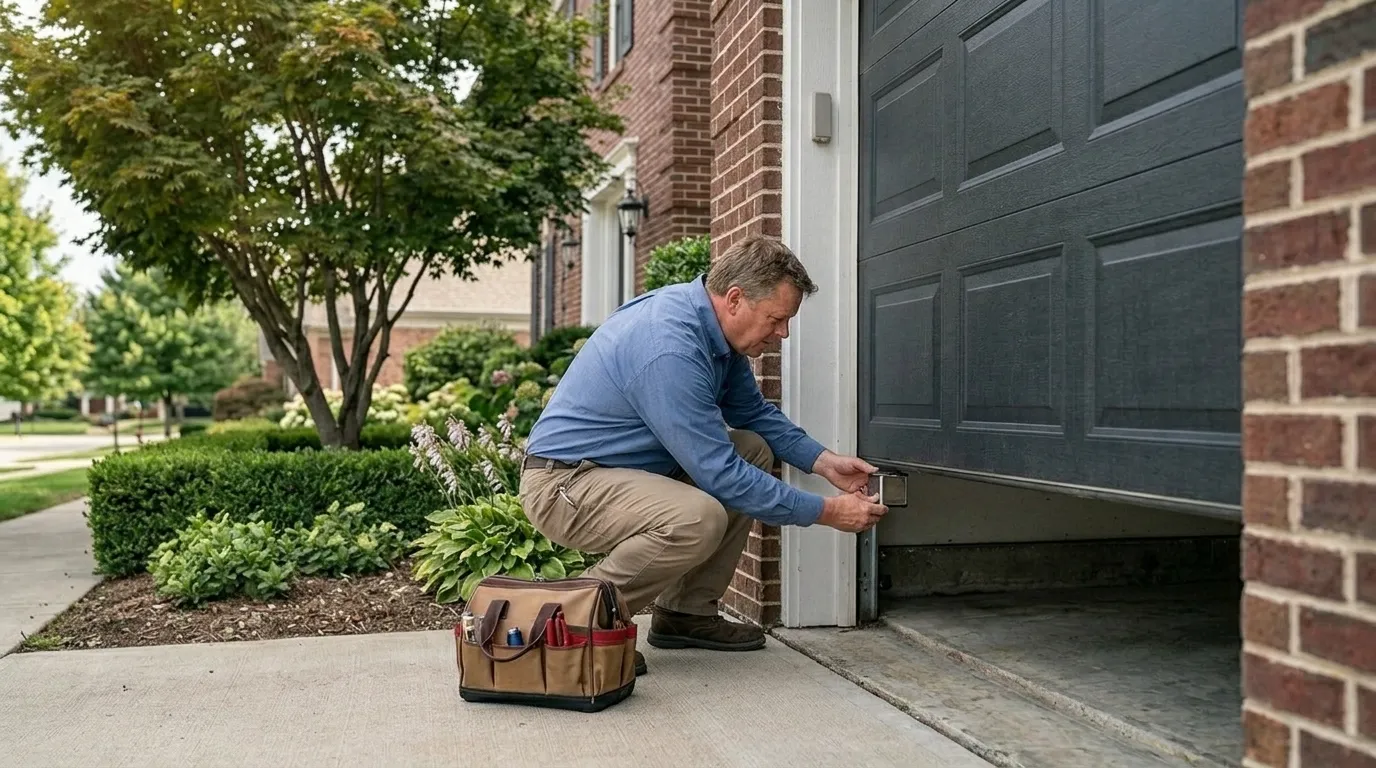
The second is skipping the opener's force and travel settings after doing hardware work. On a door with new rollers or adjusted cables, the opener is still calibrated to the old resistance curve, and it either slams the door down too hard or refuses to close, tripping the safety reversal every time. That's an easy thing to miss if the visit is treated as
Talk to a Technician Before You Book
Describe what the door is doing and get a straight answer on what it likely needs.
Jobs Like Yours
Recent work from this service line.
Why Glendale Calls Us
Frequently Asked Questions
How often should I get my garage door serviced in Glendale?
There's no single answer we can give without seeing the door, but on housing this age - much of the stock across this area predates 1960 - hardware wears at a different rate than newer builds, so we'd rather look at the actual door than quote a generic interval that doesn't account for what's original versus replaced.
Does Glendale's weather affect how often I need maintenance?
Indirectly. The mild temperate climate here doesn't force sudden failures the way freeze-thaw regions do, which means worn parts often keep working quietly for longer before they fail outright. That's not a reason to skip maintenance - it's a reason wear gets caught later than it should.
Is maintenance worth it on an original 1950s or 1960s door?
Often yes for the track, rollers, and hinges - those can be adjusted and lubricated regardless of age. Springs and cables are a case-by-case call. If they're original to a house built in that era, we'll tell you honestly whether a tune-up buys real time or whether the hardware is due for replacement.
Do you cover areas outside Glendale itself?
Yes, this service covers the surrounding area as well as Glendale proper. Each nearby town has its own page with detail specific to that area's housing and distance from our shop.
Need Garage Door Maintenance Built Around Glendale's Housing Stock?
Call now for straight answers on cost and timing.