
Garage Door Repair in Pico Rivera
Garage Door Repair for Pico Rivera's 1950s Doors
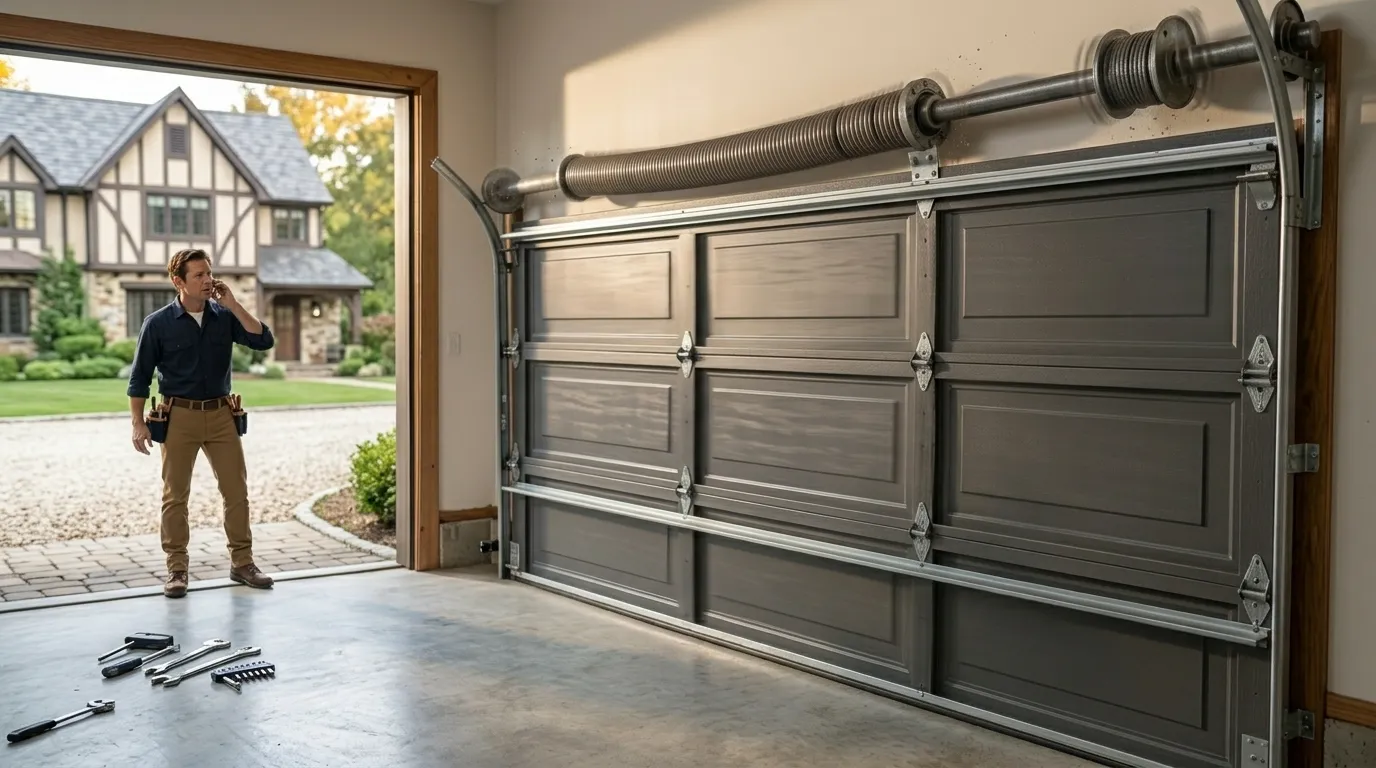
Pico Rivera's garages mostly date to 1957 - single steel doors on side-mounted extension springs. We drive out from Glendale to fix them, not replace what still works.
- Licensed & Insured
- Same-Area Service Calls
- Upfront Pricing
What Happens When You Call
-
1
Call or Request a Quote
Tell us what the door is doing and roughly how old the house is - that alone points us toward the likely part before a truck leaves.
-
2
On-Site Diagnosis
A tech checks the spring, cables, tracks, and opener in person and tells you plainly what is actually wrong.
-
3
Straight Price, No Surprises
You get a number before any work starts. It covers parts and labor, nothing added after the fact.
-
4
Fixed the Same Visit
Most repairs are done in one trip. If a part needs sourcing, we tell you that upfront instead of guessing.
What the Fix Involves
Most garages in Pico Rivera date to around 1957, and that means a single 8-foot steel door hung on side-mounted extension springs, not the torsion bar setup you'd find on a newer double-wide. Before we talk about what's broken, that's the frame you have to start from: these are lighter doors than what gets built today, on hardware that was standard for its decade and is now a generation behind what's on the shelf at most parts counters.
The actual fix, once we're looking at the door, is usually one of a short list: a snapped extension spring, a frayed lift cable, a roller that's worn its track groove wide, or an opener drive gear that's stripped from years of straining against hardware it wasn't matched to. We replace the failed part with current-spec extension springs rated to the door's actual weight, not a same-as-before guess, because "same as before" is often part of why it failed.
We don't push a torsion conversion on a door that's running fine on extension springs just because it's the newer standard. If the track is straight and the jamb is square, we fix what's there.
Where This Job Goes Sideways
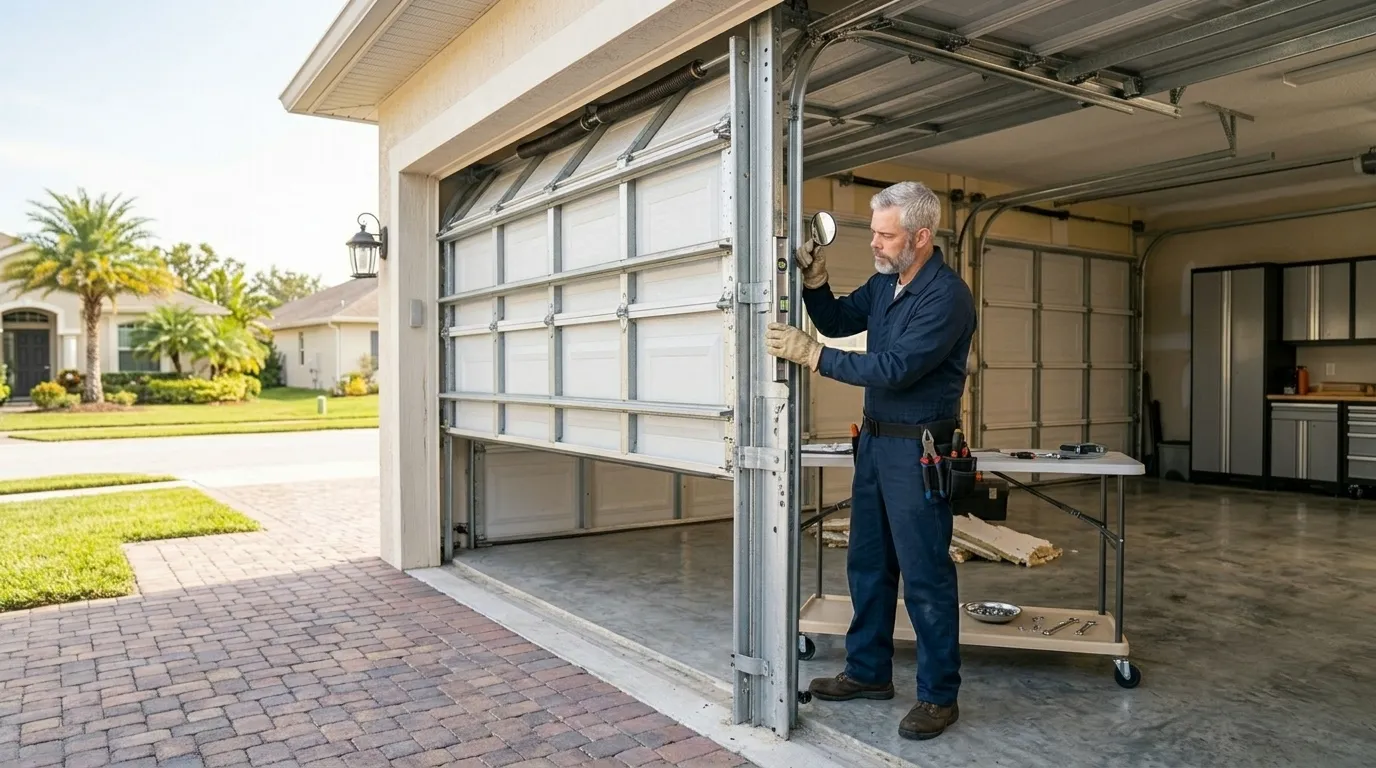
The trouble on a 1957-era door isn't usually the spring itself - it's what's around it. Side-mounted extension springs on these doors often run with no separate safety cable, because that wasn't code when the door went up.
When one of those springs lets go without a cable holding it, it can whip the length of the track. We won't reinstall a spring without adding the cable, even if that means the job runs a little longer than a straight swap.
The other place this goes sideways: owners who've bolted a heavier insulated panel onto the original door over the years to cut down on street noise or heat. That adds weight the spring was never sized for, and it's the single most common reason we find a spring that failed well short of its expected life. If your door feels heavier to lift by hand than it looks, that's usually why.
And because we're coming from Glendale, about 16 miles out, we try to get the make, model, and rough symptoms over the phone before the truck leaves - a job that turns into "we need a part we don't have on the truck" costs you a second visit, not just an hour.
Can You Do This Yourself
An extension spring under load is not a weekend project, and I'll say that plainly: the spring is storing enough force to break a hand or worse, and side-mounted setups without a safety cable have hurt people who thought they had it under control. If a spring's already snapped and the door's down, that part's not a DIY call.
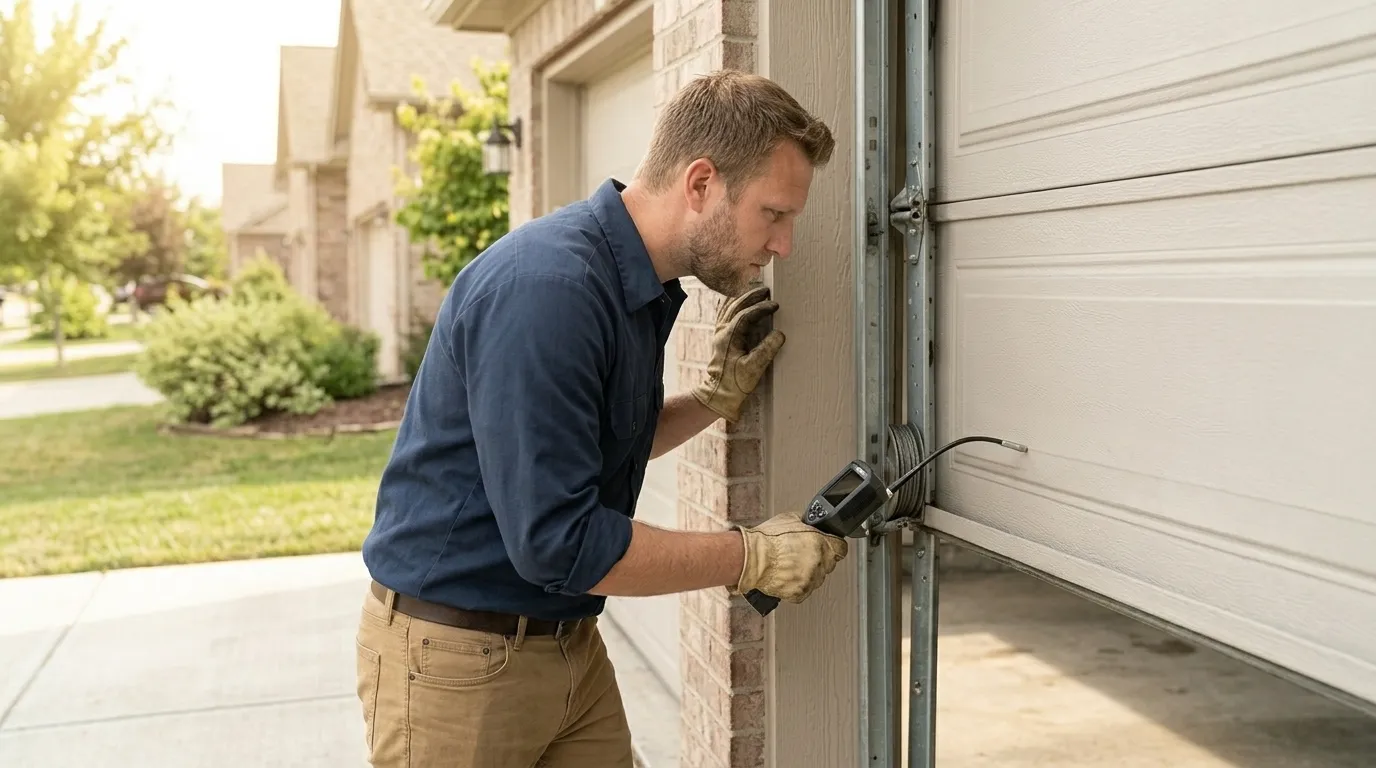
What you can reasonably check yourself: the tracks for visible bends, the rollers for cracking or flat spots, and whether the door is out of balance (it should hold roughly level at waist height when disconnected from the opener and lifted by hand - if it drops or shoots up, that's a spring problem, not an opener problem).
One honest limitation: on some of the oldest doors here, the track hardware is no longer made to the original spec, and a repair means adapting current parts rather than finding an exact match. That's not always a clean swap, and it sometimes means the smarter move is a new door section rather than chasing parts for one that's been out of production for decades.
Why It Happens Here
Pico Rivera sits in a mild year-round climate band, so the springs and cables here aren't failing from freeze-thaw cracking or extreme heat swelling the panels the way you'd see in a harsher climate. What's wearing them out is simpler: age and cycles. A door and its hardware installed around 1957 has, by now, gone through more open-close cycles than most of the mechanical parts on the house were built for.
Across the roughly 16,804 households in Pico Rivera, a large share are still running some version of that original hardware, even where the door panel itself has been swapped out once or twice over the decades. The spring gets replaced when it breaks; the track, the drum, the mounting brackets often don't get a second look until something else goes with them.
At a median household income of $86,956, most of what we see requested here is the targeted repair - the part that's actually failed - rather than a full door replacement, unless the frame or track is bent past the point where a repair holds.
What You Are Seeing
A door that won't budge, with the opener motor still running, usually points to a broken spring - the opener has nothing to lift against. A door that slams down hard instead of settling is the same problem from the other direction: no spring tension holding the weight on the way down.
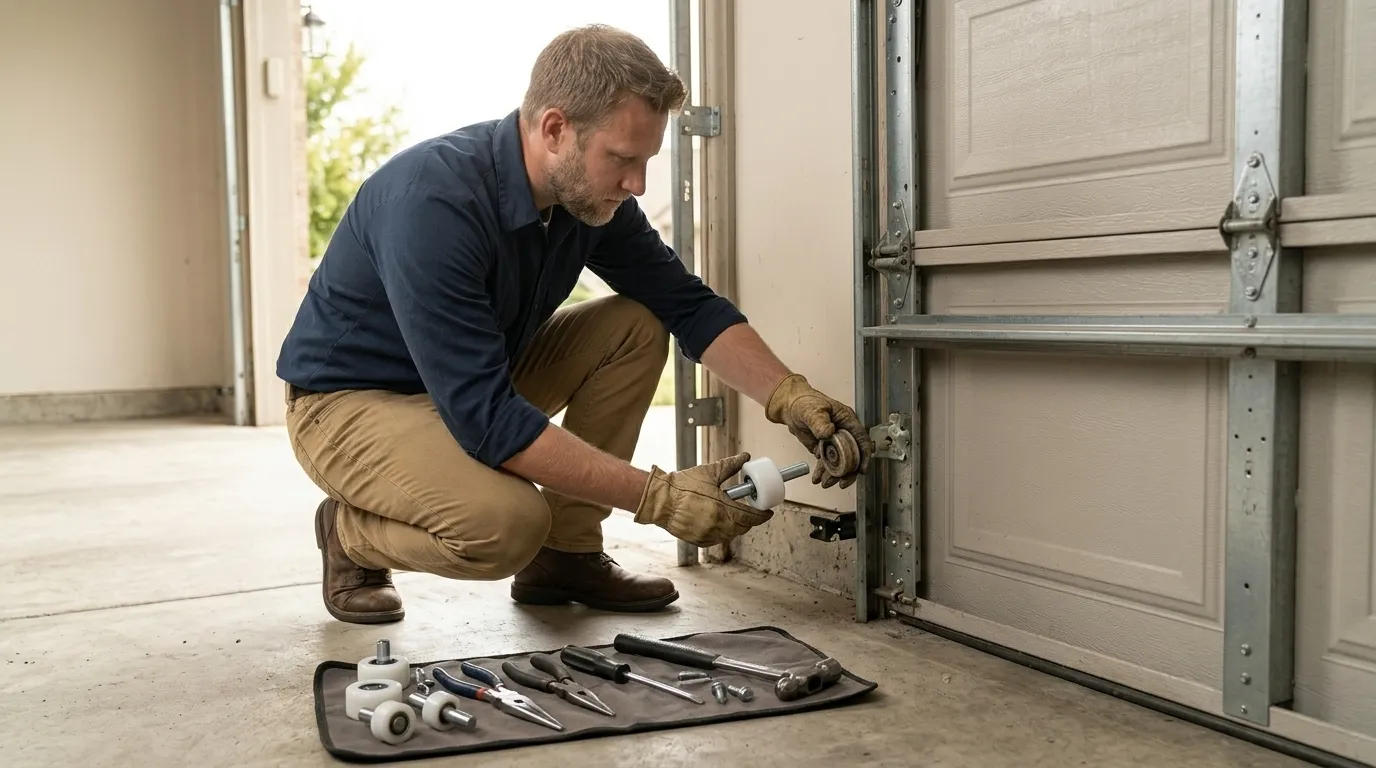
A grinding or popping sound right before the door sticks is often a roller that's worn through its bearing, especially on the original steel rollers some of these doors still have rather than a nylon replacement. If the door runs but leans to one side as it travels, check whether one spring has failed while the other's still holding - a lopsided door is almost always an uneven spring, not a track problem, even though it looks like the track is where it's binding.
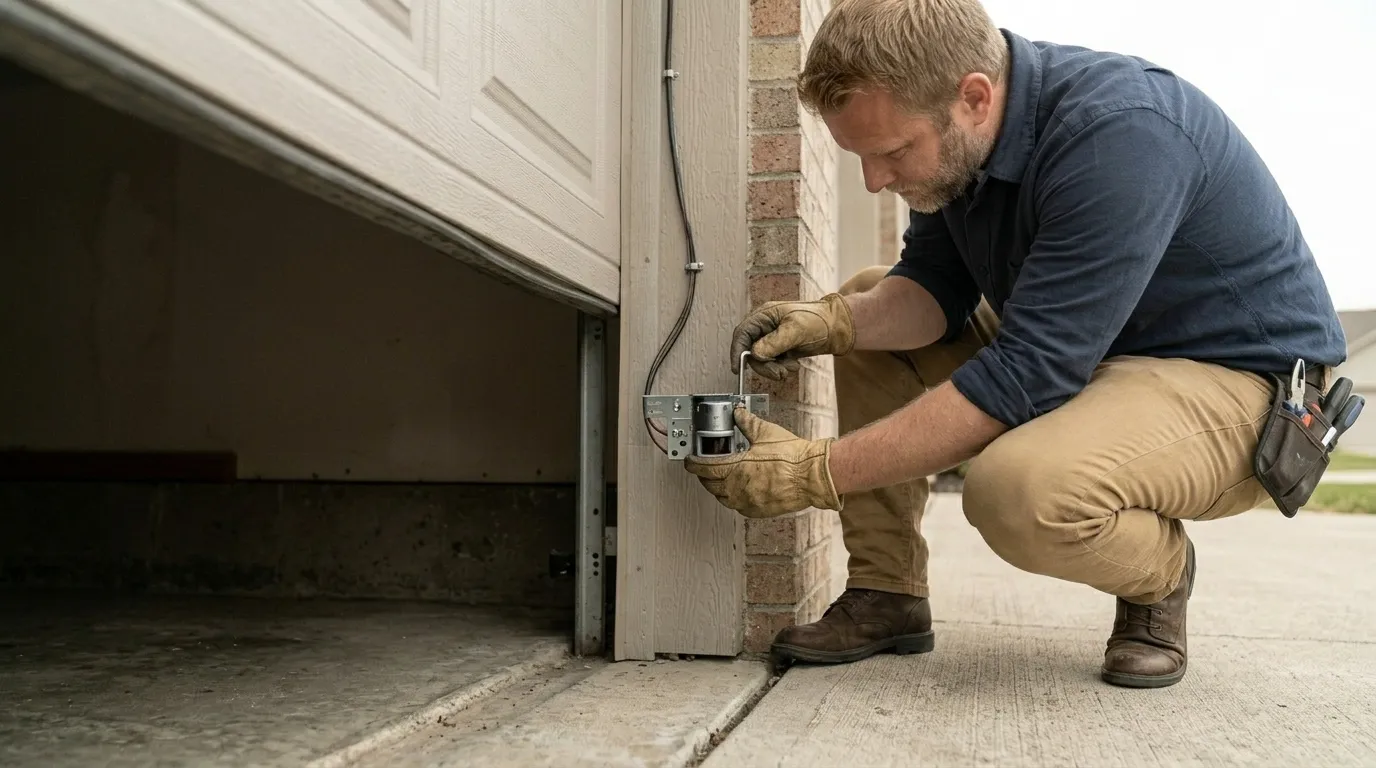
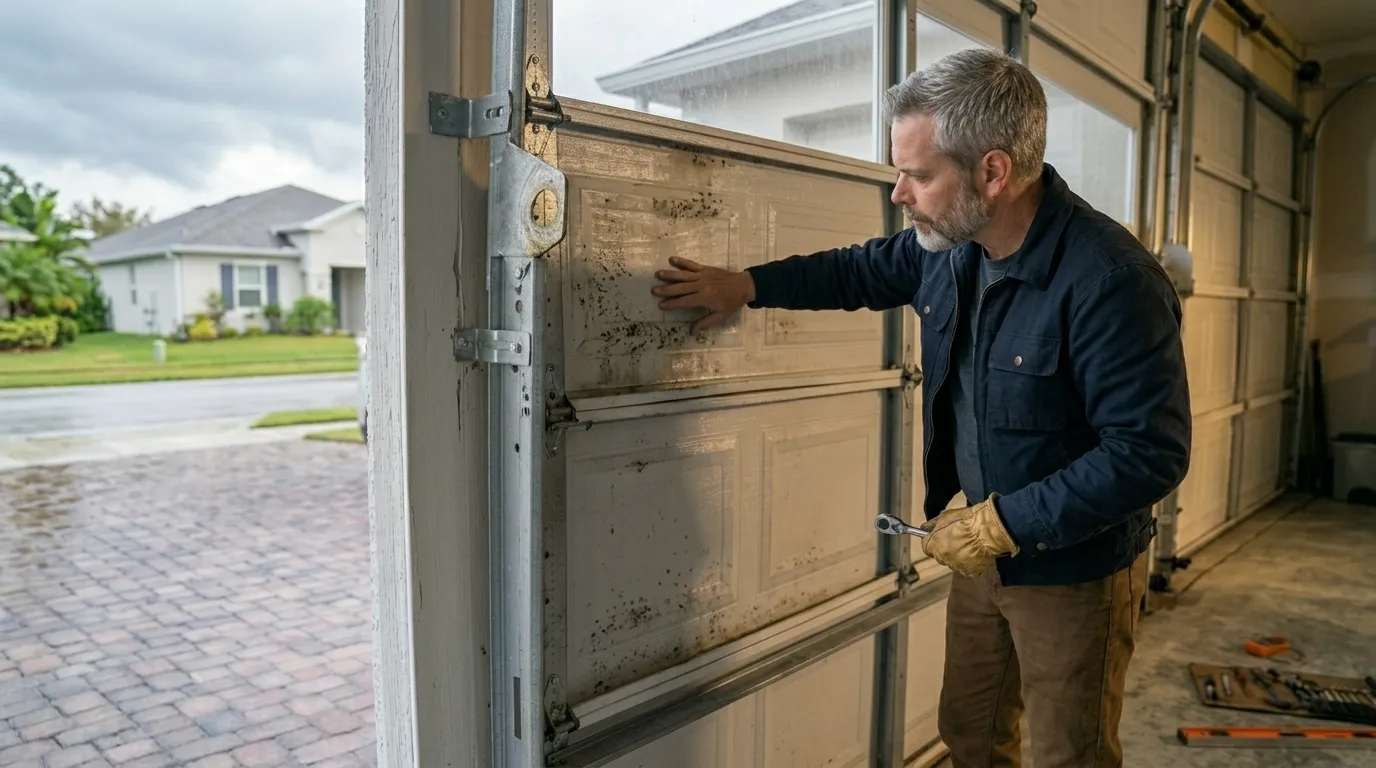
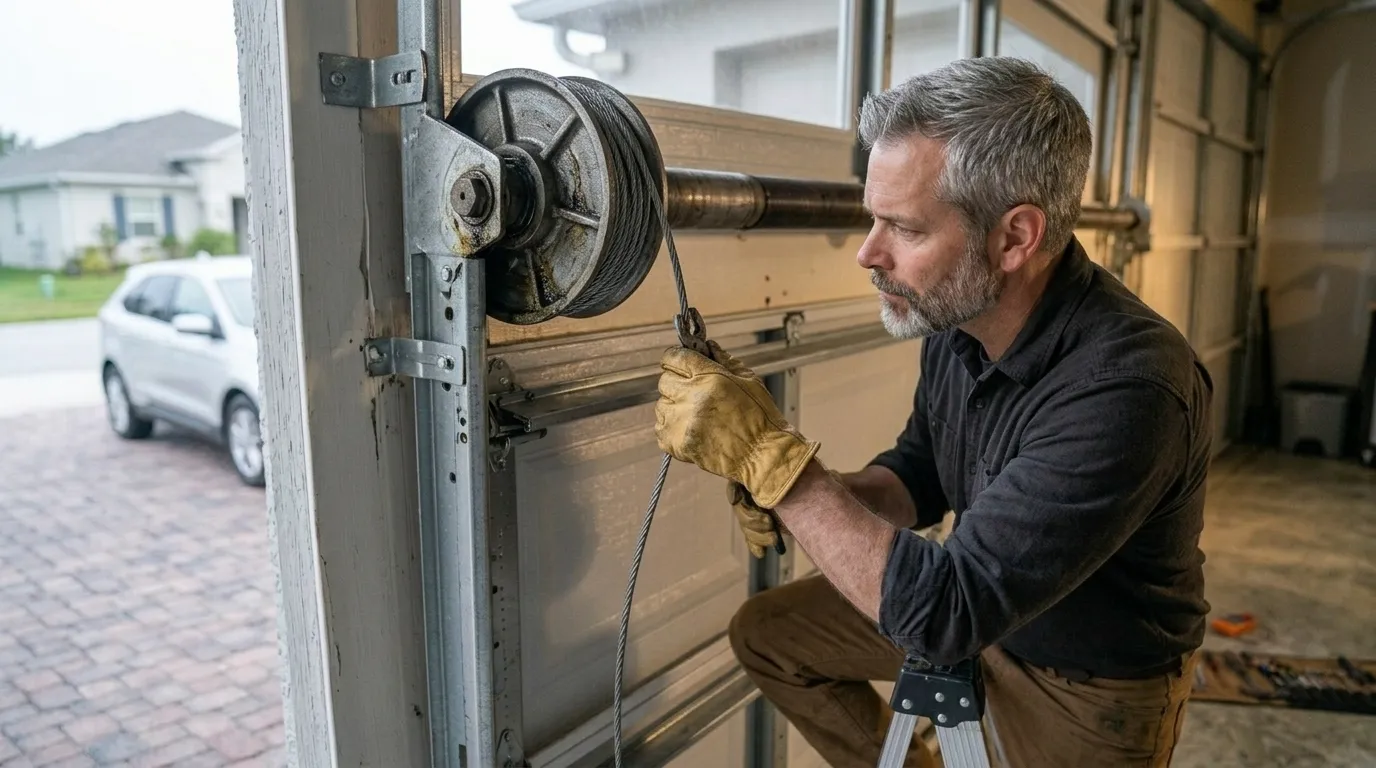
A cable that's frayed at the drum, visible as small wire strands sticking out rather than a clean braid, is a warning sign worth calling about before it snaps rather than after. None of these are urgent-only-at-2am problems, but none of them get better on their own either.
Talk to a Pico Rivera Technician First
Describe what the door is doing and get a straight answer on what it likely needs.
Other Garage Door Services in Pico Rivera
Recent Work in Pico Rivera
A look at jobs our crew has been on nearby.
Why Pico Rivera Calls Us
Frequently Asked Questions
Does Glendale Garage Door Co have a branch in Pico Rivera
No. We work out of Glendale, about 16 miles away, and travel out to Pico Rivera for scheduled jobs. We're upfront about that distance so you know what you're booking - a truck coming from Glendale, not a local depot.
Why did my spring break when the house is only from 1957, not that old
1957 is old enough for a spring. Most extension springs are rated for a set number of open-close cycles, not years, and a door used daily for six decades has gone through cycles most hardware from that era was never expected to hit.
Can you match the original hardware on an older Pico Rivera door
Sometimes, and sometimes not - a lot of the exact track and drum hardware from that period isn't made anymore. We'll tell you straight if a repair means adapting current parts instead of an exact match, and when that's the case, we'll say so before we start.
Need Garage Door Repair in Pico Rivera?
Call now for straight answers on cost and timing.